

State of the art
The IUSS Divisions, Commissions and Working Groups Chairs can now share their publications on the IUSS Alert. Every month, send your publications to the Secretariat and they will be published here. Please do so by the 15 of every month to make sure your articles are published in the monthly current issue. Let’s keep our community posted on the progress of Soil Sciences.
Highlighted IUSS publications
By Division 4
Where Are We With Gender Parity in Academia and Professional Societies? A Multinational Look at Women in Soil Science
Soil science as a discipline has been slow to address gender equity issues. In fact, gender equity in soil science has gained increasing attention only since the late 2010s. To date, women are still underrepresented, particularly in higher level positions and awards. This study concludes that, while progress has been made on several fronts, there is still much work to be done to achieve gender equity in soil science academia and professional societies. It is recommended that soil science societies collect, analyse and compare data on gender in the discipline so that progress can be evidenced, tracked and encouraged.
DOI: https://doi.org/10.1111/ejss.70039
Evolution of soil organic matter pools during Martian regolith terraforming, with a focus on organo-Fe (oxyhydr)oxide interactions
Converting inert regolith simulants into biologically active, nutrient-rich substrates is feasible. This has direct implications for both terrestrial applications in degraded or engineered soils and extraterrestrial scenarios, where in situ resource utilization and long-term soil functionality are essential. Thus, the optimization of compost composition will be crucial for designing sustainable agroecosystems for space exploration. Ultimately, this study underscores the potential of organic amendments and leguminous crops to transform inert Martian regolith into biologically functional soils, offering critical insights for in situ resource utilization in space agriculture.
DOI: https://doi.org/10.1016/j.envres.2025.122362
Time and climate roles in driving soil carbon distribution and stability in particulate and mineral-associated organic matter pools
Time and climate play a different role in soil organic carbon (SOC) distribution between the pools and on their relative stability. Soil age drives mineral-associated organic matter (MAOM) stability in drier and warmer conditions, whereas a wetter and cooler climate determines a higher SOC accumulation both in the MAOM and in the particulate organic matter pools, although these greater carbon stocks are negatively correlated with their stability. This implies that the elevated stocks accumulated in wetter and cooler conditions may be highly sensitive to ongoing climate change scenarios regardless of the fractions considered.
DOI: https://doi.org/10.1016/j.scitotenv.2025.178511
By Division 4.3 Special issue “Mitigating the impact of land use and its change through conservation management” in Soil Use and Management”
Soils are vital for supporting agriculture, mitigating environmental quality, and provision of ecosystem services. Healthy, functioning soils are the keystone to global sustainability of ecosystems and land-based human activities, and for providing healthy environments for humankind. Land use change has affected almost one third of the global land area, a trend accelerating in the last few decades. Intensive and extractive approaches to soil management led to soil degradation, evidenced as increased soil erosion, soil acidification, salinization, desertification and soil and ecosystem pollution. All these induce a decline in soil functions, destroy biodiversity and increase vulnerability to natural disasters. Soil and water conservation management can mitigate negative impacts and even improve soil health through conservation management practices.
The selected papers will mainly report the latest achievements in research focused on conservation, restoration and improvement of land use and its change through conservation managements, focused on promoting the sustainability of managed and natural ecosystems.
This special issue was initiated by IUSS (International Union of Soil Sciences) Commission 4.3 – Soils and Land Use Change. We welcome original papers and reviews that might be presented at the 23rd World Congress of Soil Science held in Nanjing, China, on June 7-12, 2026.
Guest Editors:
• Prof. Gary Feng
USDA-ARS, United States
• Prof. Felipe A. Zúñiga Ugalde
Universidad Austral de Chile; Instituto de Bosques y Sociedad, Chile
• Prof. Ying Ouyang
USDA Forest Service; Southern Research Station, United States
• Prof. José Dörner
Universidad Austral de Chile; Instituto de Ingeniería Agraria y Suelos, Chile
• Dr. Tingting Chang
Hohai University, China
• Prof. Rainer Horn
Institut für Pflanzenernährung und Bodenkunde; Christian-Albrecht-Universität zu Kiel, Germany
• Dr. Ingrid Martínez
Instituto de Investigaciones Agropecuarias (INIA-Chile), Chile
Submission deadline: Saturday, 1 August 2026
MEDAL
VLADIMIR FRIDLAND SOIL GEOGRAPHY MEDAL
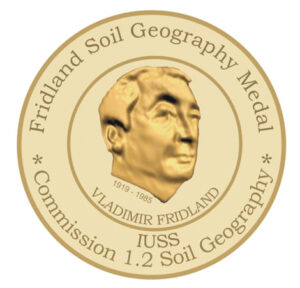
The Vladimir Markovich Fridland Medal was introduced by IUSS Commission 1.2. – Soil Geography to commemorate Prof. Vladimir M. Fridland for his distinguished contribution to soil geography. This IUSS medal is awarded for outstanding and sustained contribution in the discipline of geography and cartography of soils.
Professor Vladimir M. Fridland is well known among soil scientists and geographers in the world for his contribution to several spheres in soil genesis, geography and soil mapping, part of which is his theory of soil cover pattern.
The awardees must demonstrate an outstanding and sustained performance in the discipline of geography and cartography of soils. All areas of soil geography including research, teaching and its application to environmental, agricultural and technogenic problems are considered relevant. The medal is not invested posthumously.
PERIODICITY OF NOMINATION: the Vladimir M. Fridland Soi Geography Medal is currently awarded every four years and presented at the World Congress of Soil Science of the IUSS.
The nominees may be proposed by institutions, societies, commissions and working groups of the IUSS, and individuals. Members of the Award committee are not eligible to make nominations or second nominations.
The proposal for nomination must be submitted to the Award committee chair, and should include:
• Statement of key achievements and career highlights of the nominee (1 page)
• Curriculum vitae detailing career history and publication record of the nominee
• Name of proposer and seconder for the nominee
• Any other relevant information in support of the nominee
• Full address and contact details of the nominee
NOMINATION PROCEDURE: the call for the nominations is publicized during the year before the date of the award, via the Commission Business Meetings and/or IUSS Alerts. The selection committee for the Fridland Gold Medal award is composed of the representative of the medal sponsor (Dokuchaev Soil Science Society) plus the Chair (the Chair of this Committee) and past Chair of IUSS Commission 1.2. Soil Geography In 2025/2026 the deadline for nominations is 07.12.2025. The packages of documents should be sent to the e-mail sergey.gory@gmail.com.
Guy Smith Medal Award 2026 – Invitation to Propose Nominees by February 28, 2026
Dear Colleagues:
The Guy Smith Medal is awarded for outstanding contributions to the development of soil classification.
The IUSS Guy Smith Medal Award Committee is pleased to invite you to propose nominees for the forthcoming Guy Smith Medal Award:
https://www.iuss.org/awards-medals-and-prizes/guy-smith-medal/
The next award will be handed over during the Nanjing 23rd World Congress of Soil Science (https://www.23wcss.org.cn/), to be organized from June 7 to 12, 2026 by the Soil Science Society of China.
Criteria for selection:
The nominee should have the following qualifications:
1. She/he must have made a significant scientific contribution that has advanced the field of soil classification, and
2. Be a published author in the field of soil classification, and
3. Be an active member, Honorary member, or formerly active member of a national or international soil science professional society, and
4. The medal is not invested posthumously, and
5. Present officers of IUSS Commission Soil Classification cannot be nominated.
The proposal for nomination should comprise a short text, including the main steps of the scientific career of the nominee, her/his most relevant scientific publications and major contributions to the development of soil classification.
We look forward to receiving your proposals by February 28, 2026.
CVs of the nominees and a motivation letter should be sent to:
Peter Schad <peter.schad@tum.de>, with copy to Maria Gerasimova <maria.i.gerasimova@gmail.com> and to Lucia Anjos <lanjos@ufrrj.br>
Yours Sincerely,
Prof. Peter Schad
Chair of Soil Science
Technical University of Munich, Germany
Prof. Maria Gerasimova
Department of Soil Geography and Landscape Geochemistry
Faculty of Geography, Moscow Lomonosov State University
Moscow, Russia
Prof. Lúcia Helena C. Anjos
Soils Department, Federal Rural University of Rio de Janeiro (UFRRJ)
Seropédica, Rio de Janeiro, Brazil
Prof. Dr. Wulf Amelung receives Philippe Duchaufour Medal 2025
At this year’s General Assembly of the European Geosciences Union (EGU), Prof. Dr. Wulf Amelung, a long-standing member of the German Soil Science Society (DBG) and former DBG Vice President, has been awarded the prestigious Philippe Duchaufour Medal, the highest award of EGU in Soil System Science, in recognition of his outstanding scientific contributions to the field.
Wulf Amelung is head of the group General Soil Science and Soil Ecology at the University of Bonn and of the unit Agrosphere of the Institute of Bio- and Geosciences at the Forschungszentrum Jülich. His research focuses on nutrient cycles, soil functions, and innovative analytical approaches in soil ecology.
News from the IUSS
Soil monitoring: Parliament adopts new EU law with better support for farmers
According to the new law, member states will have to monitor and assess soil health across their territories using common soil descriptors – characterizing the physical, chemical, and biological aspect of soil health for each soil type – and an EU methodology for sampling points. To make it simpler for member states, they will be free to build on national soil monitoring campaigns or other equivalent methodologies. The Commission will support member states by reinforcing its current EU soil sampling programme: LUCAS Soils. It will also offer tailor-made financial and technical support.
To reflect different levels of soil degradation and local conditions, national governments will set non-binding, sustainable targets for each soil descriptor, in line with the overall objective of improving soil health.
Decade of Soil Sciences for Sustainable Development 2025-2034 – Healthy Soils for Humanity
The new decade of soil sciences for sustainable development has begun, read the manifesto and download the logo here: https://www.iuss.org/decade-of-soil-sciences-for-sustainable-development/
The Decade aims to prioritize the production, dissemination, and use of actionable scientific knowledge across all areas of soil sciences to support the achievement of the Sustainable Development Goals (SDGs).
Divisions, Commissions, and Working Groups are encouraged to coordinate with the IUSS Research Forum in planning activities aligned with the themes of the Decade. These may include special issues, books, position papers, policy briefs, webinars, conferences, workshops, sessions at the World Congress of Soil Science (WCSS), and other relevant initiatives.
2025 IUSS World Soil of the Year
The “Gleysol – Hydromorphic soil supporting forest growth in the steppe region from the Carpathian Basin”, has been named the World Soil of the Year 2025. This soil was proposed by the Hungarian Soil Science Society. It highlights the significance of these unique soils that have a large global coverage, occurring in nearly all climates.
The represented World Soil of the Year soil profile is located at the Püspökladány Experimental Station and Arboretum University of Sopron Forest Research Institute (SOE-ERTI). The soil is part of a unique cultural landscape dominated by grasslands and salt effected pastures in the Hungarian Plain. It is located within the Hortobágy National Park, which is a UNESCO Biosphere Reserve (Man and the Biosphere Program – MAB) and recognized UNESCO World heritage site.
Gleysols are soils that are affected in various areas in the world by land use and management and by the indirect and direct effects of climate change. Salinization of groundwater, decreasing groundwater levels and alternation of sediment influx are common.
The election of the ‘Gleysol – hydromorphic soil from the steppe region in the Carpathian Basin’ as the World Soil of the Year 2025, comes amid growing global concerns about soil health and environmental change. Protecting and sustainably managing these hydromorphic soils is essential for mitigating floods, preserving water quality, and ensuring sustainable forest ecosystems in steppe terrains.
Various activities are planned throughout the year to celebrate this achievement, including educational programs, community workshops, and conservation initiatives aimed at promoting awareness of Gleysols’ ecological significance.
For more information on the World Soil of the Year – the Gleysol from the Carpathian Plain: https://www.iuss.org/world-soil-of-the-year/
World Soil of the Year 2026 – Deadline Submission
In recognition of the success of many national programs, the IUSS WSY one has been implemented to enhance soil literacy across different countries and on a global scale. The aim is to draw up a registry of soil heritages, to acknowledge the natural and cultural value of soils, and to open doors for soil science to integrate with environmental protection activities and projects.
The deadline for the nomination of the World Soil of the Year 2026 is November 30, 2025. For more information: https://www.iuss.org/world-soil-of-the-year/
Division and Commission Officers Election – 2026 and members of the Standing Committees Election 2026
The process for the election, of the new Divisions and Commissions Officers and Chair of the Standing Committees, has officially started, the IUSS Members have been notified by the Secretary and provided with the Guidelines for the procedure, the list of the available positions and the official nomination form. The elections will be completed at the very beginning of the new year, and the names and positions will be published on the IUSS Alert.
The nominations for the Standing Committees members must be forwarded to the Secretary (iuss.secretariat@crea.gov.it) within October 31 November 15, 2025.
They will be then evaluated by the Executive Committee within November 30, 2025 and then voted by the National Societies.
Election Calendar and Deadlines
Standing Committees candidacies: New deadline October 31 November 15, 2025
Executive Committee evaluation of the candidacies for the Standing Committees: November 30, 2025
Electoral Committee scrutiny of the candidates: November 30, 2025
Opening of the voting system for your society members: December 20, 2025
Closing of the voting system for your society members: March 20, 2026
Notification to the Electoral Committee and Secretariat: within April 30, 2026
Winners’ announcement: within May 31, 2026
Download the Division and Commission Chair Nomination Form
Download the Standing Committee Member Nomination Form
Download the IUSS 2026 Election Guidelines
World Soil Day (WSD) 2025
Healthy Soils for Healthy Cities
In celebration of World Soil Day (WSD) 2025, the Food and Agriculture Organization of the United Nations (FAO), its Global Soil Partnership (GSP), the European Union through its EU Mission, “A Soil Deal for Europe” and the International Union of Soil Sciences (IUSS) are launching the “Tiny soil detectives” contest.
This contest invites young people to explore the hidden world beneath their feet. Urban soils may seem invisible, but they cool our streets, soak up rainwater, grow food, and sustain life: even in the tiniest cracks. Through fun, hands-on experiments, kids will become “urban soil detectives,” observing, testing and documenting their discoveries to uncover how soil shapes life in their neighbourhoods.
More information and submission deadline: https://www.fao.org/global-soil-partnership/resources/highlights/detail/en/c/1743033/
Soil in 1 minute: Join the World Soil Day 2025 video contest
In celebration of World Soil Day (WSD) 2025, the Food and Agriculture Organization of the United Nations (FAO), its Global Soil Partnership (GSP), the European Union through its EU Mission, “A Soil Deal for Europe” and the International Union of Soil Sciences (IUSS) are launching the “Soil in 1 minute” video contest.
This contest invites scientists, designers, communicators, educators, and creative individuals to create short, engaging explainer videos (maximum one minute) aimed at children aged 8–15. Participants are asked to use simple language, drawings, models, or themselves to show why healthy urban soils are key for healthy cities.
More information and submission deadline: https://www.fao.org/global-soil-partnership/resources/highlights/detail/en/c/1743036/
Soil Mission Manifesto
The Mission Soil Manifesto (https://mission-soil-platform.ec.europa.eu/community/mission-soil-manifesto) calls for action to respond to the urgent need to protect and improve soil health in Europe and beyond and bring together regional and local policymakers, stakeholders and citizens into a vibrant community that cares for soil health. It was launched by the EU Mission Soil on April 18, 2023, and it has been signed by the IUSS President, Prof. Victor O. Chude.
Soil Science Society of China (SSSC) and IUSS
The 23rd World Congress of Soil Science (WCSS) – Soil and the Shared Future for Humanity

Date: 7th -12th June, 2026
Location: Nanjing, China
Nanjing Welcomes Global Soil Scientists for the 23rd World Congress of Soil Science
Soil Science Society of China successfully won the bid to host the 23rd World Congress of Soil Science (WCSS) in Brazil’s 21st WCSS. For the first time, China as a host country invites global soil scientists to explore the centennial journey of soil science.
The 23rd WCSS will be held in the International Expo Center from June 7 to 12, 2026 in Nanjing, the capital city of the most developed Jiangsu province, under the theme of “Soil and the Shared Future for Humanity”. 121 sessions in five categories have been accepted.
Deprived from the Chinese character “土” (Soil), the mascot KuiKui manifests the concept of “One World for One Earth”. The emblem on its belly represents the earth, with the inner circle featuring five typical soil colors in China, while the outer circle featuring the blue ocean.

The World Congress of Soil Science is the most authoritative and influential international conference in the field, sponsored by the International Union of Soil Sciences. It is a major event for scientific and technological professionals in soil science and related disciplines worldwide to engage in academic exchange. Held every four years, the conference covers a wide range of topics and serves as a platform for exchange and collaboration among soil scientists from around the globe.
The WCSS2026 theme, ‘Soil and the Shared Future for Mankind’, focuses on the importance of soil for our future, with a variety of arrangements including poster exhibition, young researcher forum and soil judging contest. Tours will also be organized for participants to visit typical soils in combination with unique landscapes and cultural diversification as China is a vast country with rich soil resources.
With a global population that is projected to exceed 9 billion by 2050, our current and future food security hinges on our ability to increase yields and food quality using the soils that we already have available today. We are responsible for the soils that provide us with food, water and air, and we need to take action today to ensure that we have healthy soils for a sustainable and food secure future. Our understanding of the importance is developing rapidly and WCSS2026 provides a platform for us to discover the solutions to soil issues and an opportunity to connect all who work with and have interests in soils.
Read more: Join and follow via the official website: https://www.23wcss.org.cn/
Important dates and deadlines:
Abstract submission deadline: November 7, 2025
Abstract results notification: February 7, 2026
Early bird registration deadline: March 7, 2026
Regular registration deadline: May 7, 2026
Cancellation and Refund deadline: May 7, 2026
IUSS and Soil Science Society of China (SSSC)
Travel Awards for Attending World Congress of Soil Science 2026
The International Union of Soil Sciences (IUSS) and Soil Science Society of China (SSSC) are pleased to offer travel awards to support early-career scientists who wish to participate in the 23rd World Congress of Soil Science (WCSS2026) from 7-12 June 2026, in Nanjing China. This initiative aims to encourage the participation of promising graduate students and early-career researchers by providing financial assistance to help cover travel and registration expenses.
A total of $40,000 USD in funding is available, aiming for gender and geographic equity. Each selected applicant will be eligible to receive up to a maximum of $1,000 USD. The award will be disbursed as a reimbursement for actual travel costs and/or WCSS2026 registration fees incurred.
Support is only for early-career scientists who are high-quality Master or PhD students or who have completed a Master or PhD degree less than 5 years ago.
Applicants must be the presenting author of a submitted oral or poster presentation abstract for WCSS2026 and must be a member of a council society (national soil science society) that is a full member of IUSS.
Applicants need to send their applications to: wcss2026@issas.ac.cn
All applications must be submitted in English and must include the following:
a) Application letter, in PDF format, specifying the amount of funding requested (max. $1,000 USD).
b) CV including gender, education, country of residence, publication list in PDF format, maximum two pages.
c) Abstract and its received confirmation for WCSS2026.
d) Proof of student status or copy of Master’s/PhD certificate.
e) Confirmation letter from your national soil science society verifying your membership
A dedicated evaluation committee, composed of selected members of the IUSS and SSSC Executive Committee, will review all applications. Successful applicants will be notified via email by the WCSS2026 organizing committee no later than 28 February 2026 (UTC+8).
The results will also be announced on the WCSS2026 (https://www.23wcss.org.cn/) and IUSS (https://www.iuss.org) official website. The decision of the evaluation committee would be final and no discussion on the outcome will be entered into.
Deadline: 24:00 (UTC+8) on 31 December 2025.
Contact: wcss2026@issas.ac.cn or +86-025-86881992
23rd WCSS
1. YECS Session: Soils across generations
Bridging young and senior scientists for a shared soil future is the YECS flagship activity at the WCSS2026 and aims to bring generations of soil scientists to collaborate, share, and inspire. We invite you to consider participating in this session and helping us to disseminate it. This session particularly focuses on the collaborative efforts and experiences of young and senior scientists in teaching, disseminating, and conducting research on and around soils.
A survey has been developed to connect early with those interested, and below you will find a poster and flyer.
✍️ Connect early form: https://forms.gle/mGEn8nkZnPwoHmbx8
📅 Congress website: https://www.23wcss.org.cn/
📄 Session description: https://tinyurl.com/2uun4d9b
Deadline for submissions is November 7.
2. Global trends on historic agricultural terraces
Agricultural terraces have shaped diverse ways of life in mountain systems for centuries, molding the landscape and providing services that sustain communities.
At the upcoming WCSS2026 in Nanjing, this session will explore the role of terrace soils as key elements in mountain agriculture. Looking forward to meeting colleagues who study terraces from the perspectives of soils, archaeology, history, geography, cultural heritage, and beyond.
📅 Congress website: https://www.23wcss.org.cn/
📄 Session description: https://tinyurl.com/ds7mmr8w
Deadline for submissions is November 7.
Accelerating equity in Soil Sciences to strengthen the IUSS
SESSION 404001 IUSS 23rd World Congress on Soil Science
The lack of female scientists, especially in positions of responsibility, not only limits the contributions of 50% of human talent to research, innovation, and public policymaking, but also causes gender biases in many studies that can lead to erroneous knowledge or discriminatory developments, and inefficient public policies. We invite you to raise our voices with constructive proposals to promote equity and inclusion in soil sciences and be part of the change.
Our National Scientific Soil Science Societies & Universities must advance by accelerating equity in soil science to strengthen itself, and you are invited to collaborate to achieve it.
Deadline for submissions is November 7
Session description: DEI Session_WCSS 2026
Congress website: https://www.23wcss.org.cn/
Link to submit your abstract: https://www.23wcss.org.cn/submission/index.html
The Digital Age in the Study, Evaluation, and Teaching of Soil Science
Special session number 503003 IUSS 23rd World Congress on Soil Science
In the digital transformation era, we invite researchers and professionals to participate with us in this innovative session exploring the convergence between cutting-edge technologies and soil sciences. This pioneering session will address how digital tools revolutionize our understanding, management, and teaching of soil sciences. Participants will be able to observe the largest augmented and mixed reality applications that allow soil profiles to be visualized in real-time, facilitating on-site analysis and improving the educational experience in the field. We will explore the development of mobile applications focused on soil resources, as well as the potential presents by the use of artificial intelligence, machine learning, and advanced image analysis systems focused on soil sciences. This session represents a unique opportunity to establish international collaborations between soil scientists, software developers, and technology experts. Attendees will be able to share experiences on the implementation of innovative technological solutions in soil research and discuss the potential of these tools to address global challenges in soil conservation and sustainable management. In this sense, we are seeking contributions that highlight recent technological developments, successful case studies, and innovative proposals that combine soil sciences with these emerging technologies. This session will undoubtedly be a catalyst to inspire the next generations and foster the development of collaborative projects that harness the power of technology to advance our understanding of soils systems. Join this space where scientific tradition converges with digital innovation, creating new possibilities for research, education and soil management.
Contact: fernando.ayala@comunidad.unam.mx; leptosol@ciga.unam.mx
News from national and regional soil science societies 2025
British Society of Soil Science (BSSS)
Resilient Soils for a Sustainable Future – Annual Conference and Early Careers Conference BSSS
Date:
Biennial Early Careers Conference: December 1st –2nd, 2025
Annual Conference: December 3rd -5th, 2025
Location: Manchester, England
Call for Abstracts – British Society of Soil Science Annual Conference
The British Society of Soil Science is currently accepting oral and poster abstracts for both their Annual Conference and Early Careers Conference in December. The abstract review panel is accepting abstracts in one of five topics linked to the conference theme, Resilient Soils for a Sustainable Future:
1. Soils for People [Covering all aspects of Soil Health, Soil Functions, Indicators, Metrics, Ecosystem Service Delivery, Soil Biodiversity, and Sustainable Soils in Different Land Uses].
2. Soils for Climate [Covering aspects such as Net Zero, Carbon Sequestration, Peatlands, Climate Change Impacts, Adaptation and Mitigation, and Greenhouse Gas Emissions and Fluxes].
3. Soils for Water [Covering aspects such as Nutrient and Water management, Soil Erosion, and Nutrient and Water Use Efficiency].
4. Advances for Soils [Covering aspects such as Sensors and Instrumentation, New techniques, AI and data, Modelling, and Decision support tools].
5. Soils for Life [Soil, social sciences and culture, Interdisciplinary work, Stakeholder engagement, Participatory research and citizen science, and Art and culture].
Read more: https://soils.org.uk/blog/call-for-abstracts-bsss-conferences-2025/
German Soil Science
Rendzina – Soil of the Year 2025 in Germany
For 20 years now, the “Soil of the Year” has been selected by the board “Soil of the Year”, composed of members of the German Soil Science Society (DBG), the Federal Soil Association (BVB), and the Engineering Association for Contaminated Site Management and Land Recycling (ITVA). Each year, the selected soil is officially presented on World Soil Day, December 5, during a ceremony in the capital Berlin. The initiative is also strongly supported by the German Environment Agency (UBA).
The goal of the campaign is to raise public awareness of soils as vital natural resources. Through posters, flyers, brochures, websites, and exhibitions, it aims to engage a broad audience. Over the course of the year, a variety of events—including excursions and exhibitions—are organized by institutions at both regional and local level.
Over the past two decades, the focus of the campaign has shifted from a purely taxonomic presentation of specific soil types to a broader ecological perspective. It now highlights different land use systems and their interactions with soil. In 2023, the focus was on arable soils, emphasizing the importance of healthy food production. In 2024, forest soils were selected as “Soil of the Year”, drawing attention to carbon sequestration and water-related ecosystem services.
The Soil of the Year 2025 is the Rendzina—a shallow, humus-rich soil type that forms on limestone, dolomite, or gypsum bedrock, roughly corresponding to Rendzic Leptosols according to WRB. This year’s patron is Dr. Till Backhaus, Minister for Climate Protection, Agriculture, Rural Areas, and the Environment of the German federal state of Mecklenburg-Western Pomerania. Accordingly, special attention is being given to Rendzinas formed on Cretaceous limestone in the Baltic Sea region.
At the official presentation in Berlin, Dr. Backhaus highlighted that Rendzinas are more than just productive land for agriculture or forestry. They also serve as “habitats, geology you can touch, and a valuable part of our natural and cultural heritage.”
To explore these aspects further, a multi-day expert excursion will take place at the end of May, including a visit to the UNESCO World Heritage Site of the Jasmund beech forest with its iconic chalk cliffs on the island of Rügen. The tour is being organized by the State Office for Environment, Nature Conservation and Geology of Mecklenburg-Western Pomerania together with the German and Danish Soil Science Societies. On the Danish island of Møn, the participants will also have the opportunity of cross-border comparisons of Rendzina sites.
Read more: https://www.dbges.de/en/soil-of-the-year and visit the Soil of the Year page and the UBA Soil of the Year page
British Society of Soil Science
Early Careers’ Conference 2025
Date: 1–2 December, 2025
Location: King’s House Conference Centre, Manchester
Theme: Resilient Soils for a Sustainable Future
This dedicated event is free to attend for BSSS Early Career members and brings together emerging voices from academia, industry, and policy in a dynamic and inclusive space. Over the course of two packed days, delegates will explore the theme “Resilient Soils for a Sustainable Future” through a rich programme of oral and poster presentations, interactive workshops, and networking activities, all designed to highlight the latest research, innovations, and career development pathways in soil science.
Oral abstract deadline: Sunday 31 August 2025
Poster abstract deadline: Friday 24 October 2025
Full details on abstract themes and submission guidelines can be found on the BSSS website.
Read more: https://members.soils.org.uk/widget/event-6210932?sk=cnxQtp/MQEse2UJPdSbMw2I/eJrP3lfywhtQ/+H5e4iKdfGDFGZCsHorG1ytHtqF
Annual Conference “Resilient Soils for a Sustainable Future”
Date: 3–5 December, 2025
Location: King’s House Conference Centre, Manchester
Dynamic, multi-disciplinary events will bring together researchers, practitioners, and policy makers across the built environment, agriculture, and natural sciences to explore the vital role of soils in supporting a sustainable future.
The overarching theme, Resilient Soils for a Sustainable Future, will guide three days of presentations, discussions, and networking opportunities. With global challenges such as climate change, food security, and biodiversity loss becoming increasingly urgent, the conference offers a timely platform to showcase cutting-edge research and debate key strategies for strengthening soil resilience.
Researchers are encouraged to submit oral abstracts by Sunday 31 August, while poster submissions will remain open until Friday 24 October. Full details on submission guidelines and thematic focus are available on the BSSS website.
Read more: https://members.soils.org.uk/event-6210965
Italian Society of Soil Science
44th SISS National Congress
Soil Research to Support Policy Implementation
Date: December 11th-12th, 2025
Location: Department of Agriculture, University of Naples Federico II – Chinese Room – Piazza Carlo di Borbone 1, Portici, Naples, Italy.
Despite the implementation of European, national, and regional policies aimed at sustainability in the agricultural and environmental sectors, and significant progress in research on soil and agricultural and forestry ecosystems, we are unfortunately still witnessing ongoing and worrying soil degradation.
This situation raises fundamental questions about the effectiveness of current strategies. Therefore, a thorough reflection on the gap between acquired scientific knowledge and its actual application in the field is urgently needed. We must ask ourselves to what extent and how our research actually influences policies for the protection and sustainable management of soil. This conference aims to be a forum for multidisciplinary debate, bringing together researchers, practitioners, and environmental policymakers to explore how academic research can translate into a tangible impact on soil management in real-world contexts.
The Conference will be held over two days:
• First day will include a technical excursion to contaminated and reclaimed sites in the province of Naples, during which two reclamation and recovery projects for contaminated agricultural and industrial areas will be presented, along with a round table discussion entitled “The Impact of Research on Soil Management: Illusion or Reality?”
• Second day will feature two scientific sessions entitled “Innovative Approaches to Soil Study at the Scale of Processes and Properties to Support Policy Implementation” and “Innovative Approaches and the Geospatial Dimension of Soil to Support Policy Implementation.”
Abstracts deadline: October 31, 2025.
Read more: https://convegnosiss2025.it/
News from national and regional soil science societies
2026
Field International Workshop on Paleopedology “Deciphering the ancient anthropic landscape transformation in the southern Maya lowlands in Mexico”
Date: February 19th – 25th, 2026
Location: Palenque, Mexico
The objective of the workshop is to show different landscapes occupied by the ancient Mayas, from the northern alluvial plain of the Usumacinta River, where people mainly developed small and rural towns, to the highlands at Sierra de Chiapas, where monumental and well-organized cities were constructed. The workshop will consist of two-day conferences and five days of field excursions. During the first two days of the workshop, oral and poster presentations will be conducted.
The scientific topics include:
– Soil memory: a key guide for understanding past environmental and human impacts.
– Micromorphology of key pedogenetic processes. Linking microscopic observations and analytical data for differentiating anthropic and natural soil processes.
– Classification of soils in archaeological sites.
– Pedogenesis of anthropogenic soils and ecosystems.
– Novel methods and techniques and quantitative approaches in paleosol studies.
Conference Organizers:
– International Union of Soil Science, Division 1. Soil in Space and Time, Commission 1.6 – Paleopedology.
– International Union for Quaternary Research, INQUA Paleopedology Working Group.
– Instituto de Geología, Universidad Nacional Autónoma de México (UNAM).
– Instituto de Ecología A.C. (INECOL).
Important dates:
February 18, 2026: Arrival of participants
February 19-25, 2026: Workshop activities
February 26, 2026: Departure of participant
Read more: https://sites.google.com/view/paleopedology/events/events-2026
Conferences, Meetings and Workshops
2025
10th edition FESP (Fire Effects on Soil Properties)
Date: November 25th -28th, 2025
Location: UFRO, Pucón Campus, Chile
Organized by the Universidad de la Frontera and La Universidad de los Lagos.
The conference website will be available very soon with all the information.
Read more: For now more information you can write to: fesp10@ufrontera.cl
International Conference on Microplastics in the Environment
Date: November 27th -28th, 2025
Location: Newcastle, Australia
This event will bring together leading researchers, regulators, and industry to address the pressing issue of microplastics—examining their sources, transport mechanisms, impacts on soil and water systems, and strategies for mitigation. The conference will serve as a forum to share the latest research, explore innovative technologies, and strengthen collaborations that support sustainable management of this growing global concern.
Read more: 2025microplasticsinfocusconference.com/
Conferences, Meetings and Workshops
2026
Conference on Variable Charge Soils
Date: March 4th – 6th, 2026
Location: Newcastle, Australia
This specialised conference will focus on the unique properties of variable charge soils, which play a critical role in nutrient dynamics, contaminant interactions, and sustainable agriculture, particularly in tropical and subtropical regions. The event will highlight new advances in soil chemistry, management strategies, and their implications for food security and environmental protection. This conference is organised noting that we rarely take into consideration the differences in surface chemical properties of soils when designing management strategies- be these for fertility management or contaminants.
Read more: https://2026variablechargesoilconference.com/
The 4th Global Soil Biodiversity Conference (GSB 2026)

Date: April 12th -15th, 2026
Location: Victoria, British Columbia, Canada
The Global Soil Biodiversity Conferences organized under the auspices of the Global Soil Biodiversity Initiative (GSBI) are now considered to be the premier global conferences dealing with soil biodiversity. The 4th edition of the GSB 2026 will bring together researchers, policy analysts, students, and practicing farmers to discuss soil biodiversity with the goals of informing the public, promoting this information into environmental policy, and overall creating a platform for the current and future sustainability of soils.
Read more: https://globalsoilbiodiversity2026.org/
IFSA2026: Farming and Agri-Food Systems dynamics: facing crises and trade-offs in transition pathways
Date: June 29th – July 03rd, 2026
Location: Montpellier, France
As pressures from climate change, biodiversity loss, market uncertainty, and rising global food demand escalate, there is a growing need to consider how agricultural systems can be enhanced and reconfigured to withstand external shocks while advancing ecological, social, and economic sustainability. Responding to current crises calls for structured approaches that guide farmers, stakeholders, advisors, researchers, consumers and policymakers toward systemic solutions that address these overlapping challenges.
Various initiatives incite stakeholders and policy makers to innovate and develop multi-scale and multi-domain adaptation strategies for the agri-food systems. This implies to improve farmland environmental performance using sustainable practices, to reduce their CO2 emissions, and to protect the means of subsistence of farm households as well as natural resources, in particular water and soil, from the effects of climate change.
This symposium aims to revisit progress and debates in co-designing and promoting sustainable Agri-Food systems to face crises and support multiscale decisions. There are many trade-offs to document but also many synergies to analyse when looking at transition pathways and impacts.
Key dates
30/11/2025 Authors receive feedback for short paper revision or rejection
31/12/2025 Authors will have to re-submit the short paper revised version
15/02/2026 Authors are informed on short paper acceptance
15/03/2026 Early bird registration deadline
30/04/2026 Registration deadline (also for field visits registration)
Read More: https://ifsa2026.sciencesconf.org/resource/page/id/3
12th SCAR Open Science Conference & Meetings
The 12th SCAR Open Science Conference will be held in Oslo, Norway, from 10-14 August 2026, hosted by the Norwegian Polar Institute. The conference will feature an interdisciplinary programme that includes plenary lectures, parallel sessions, mini-symposia, workshops, panel discussions, posters, and social activities.
Date: August 10th –14th, 2026
Location: Oslo, Norway
Deadline for submitting: 31st August 2025
e-mail: osc@scar.org
Read more: OSC 2026 – Expression of interest
International Symposium on Earthworm Ecology (ISEE13) 13th edition in Wageningen, the Netherlands
Date: August 23rd-28th, 2026
Location: Wageningen, the Netherlands
This year’s theme, “From the lab to the field, from the field to the lab,” reflects the commitment to bridging the gap between experimental and real-world studies, both of which are essential to the advancement of earthworm research. ISEE13 will offer a dynamic platform for knowledge exchange, with a strong focus on early-career researchers who are at the forefront of addressing global challenges impacting or affected by earthworms.
Important deadline:
Opening registration: December 1, 2025
Deadline abstract submission: January 4, 2026
Decision on abstract acceptance: March 4, 2026
Deadline for early bird registration: April 15, 2026
Deadline for registration: June 17, 2026
Read more: 13th International Symposium on Earthworm Ecology – Home
The 10th International Nitrogen Conference (N2026)
Sustainable Nitrogen Management for Future Generations
Date: November 2nd-6th, 2026
Location: Wageningen, the Netherlands
The 10th International Nitrogen Conference (N2026) aims to foster global collaboration under the theme “Sustainable Nitrogen Management for Future Generations.” While coordination between science and policy is essential, effectively addressing the nitrogen challenge requires the active engagement of all stakeholders, including governments, researchers, educators, industry, civil society, and the public.
We warmly welcome participants from around the world –across disciplines, sectors, and regions –who share a commitment to building a sustainable future. This conference will serve as an inclusive platform for sharing knowledge, aligning actions, and co-creating the Kyoto Declaration, a collective roadmap toward sustainable nitrogen management.
Read more: https://www.initrogen.org/events/n2026—kyoto—2—6-november-2026
Opportunities
Soil Training
The British Society of Soil Science (BSSS), recognising the importance of quality and availability of education and training for soil science as a profession, organises the following training courses:
– Introduction to Agricultural Land Classification (TBC) – 12-13 November
Read more: Soil Training – British Society of Soil Science
Agricultural Chemistry Winter School “Soil-Plant-Microbiome functionality and adaptation to anthropogenic stress and climate change”- ACWS2026 –
Date: February 2nd –5th, 2026
Location: DAMSlab Auditorium, Piazzetta Pasolini 5b, Bologna, Italy
The Winter School, organized by the Italian Society of Agricultural Chemistry (SICA) and the Department of Agricultural and Food Sciences at Alma Mater Studiorum—University of Bologna, is offered to doctoral students, postdoctoral researchers, and early-stage researchers.
The interconnected challenges of climate change, anthropogenic activities, and the need to sustain a growing global population are increasingly compelling the need for a comprehensive approach to the soil-plant-microbiome system, necessitating consideration from both agronomic and environmental standpoints. Notably, extreme rainfall events, which are characterized by the occurrence of landslides and flooding, are becoming increasingly prevalent. These events are interspersed with prolonged drought periods, which complicate and economically burden the process of harvesting crops. Consequently, it is imperative to prioritize the enhancement of soil resilience and resistance and the protection of the ecological value of the soil-plant system.
In this regard, the field of agricultural chemistry plays a pivotal role by facilitating the identification of management strategies for the soil-plant-microbiome system.
These strategies are to be aligned with prevailing policies that are oriented towards environmental sustainability and the promotion of a circular economy. The utilization of organic-based fertilizers, biostimulants, nanofertilizers, growth-promoting microorganisms, and biodegradable bioplastic as alternatives to conventional plastics constitutes a series of winning strategies that have the potential to maintain or enhance soil fertility and quality, as well as promote plant growth and enhance their nutritional value.
Main informations:
Enrollment opens: 1 October 2025
Submission deadline: 12 December 2025 (23:59 CET)
Participation Fee: 80€
The Winter School is limited to 50 participants: preference will be given to doctoral students conducting research related to the theme of the school.
Application requirements
• Abstract (Word), prepared with the downloadable Abstract Template.
➝ File name: SURNAME_ACWS2026
• Application Form, fully completed.
• Doctoral students only: a supervisor’s statement confirming doctoral status.
School Organizer: martina.mazzon2@unibo.it
School Administration: valeria.taraborell3@unibo.it
Read more: https://site.unibo.it/acws-2026/en/the-school
New Books
Global Forest Resources Assessment 2025

By FAO 2025, Rome.
FAO completed its first assessment of the world’s forest resources in 1948. Since then, the Global Forest Resources Assessment (FRA) has evolved into a comprehensive evaluation of forest resources and their condition, management and uses, covering all the thematic elements of sustainable forest management. This, the latest of these assessments, examines the status of, and trends in, forest resources over the period 1990–2025, drawing on the efforts of hundreds of experts worldwide. The results of FRA 2025 are available in several formats, including this report, an interactive story on key findings and an online database at https://fra-data.fao.org.
ISBN: 978-92-5-140082-1
DOI: https://doi.org/10.4060/cd6709en
13th International Conference: Soils of Urban, Industrial, Traffic, Mining and Military areas (SUITMA) from a One Health Perspective (Pisa, 5-9 October 2025) CNR Book of Abstracts

Editors: Francesca Bretzel, Beatrice Pezzarossa, Francesca Vannucchi Cnr, Istituto di ricerca sugli ecosistemi terrestri, Cnr Ed., 2025
This volume presents contributions from the 13th edition of SUITMA (Soils of Urban, Industrial, Traffic, Mining, and Military Areas), a conference dedicated to soil, a fundamental element of the water and nutrient cycle, a major contributor to global carbon sequestration, and a vital habitat for nearly all terrestrial plants and a large portion of fauna. Despite its global importance, it is estimated that one-third of the planet’s soils are degraded. In anthropized areas, soils are subject to numerous forms of disturbance, such as manipulation, compaction, and pollution, which compromise their quality. For this reason, a growing number of studies are focusing on improving urban soils and creating artificial soils on sites where soils have been completely removed or sealed. Improving soil biochemical fertility, carbon sequestration, and soil biodiversity is essential to address the urgent challenges of climate change and to ensure the health of all organisms and ecosystems.
ISBN: 978 88 8080 723 0
DOI: https://doi.org/10.61008/SUITMA-2025
Pedology in the USA
Life and Works of C. C. Nikiforoff (1886–1979)

By Alfred E. Hartemink, Springer Biographies, published October 2025.
Constantin Nikiforoff was educated by premier Russian soil scientists but fled after the 1917 revolution. A refugee with no formal credentials or documentation, he arrived in the USA in 1921. He was hired in 1927 and started surveying and studying soils across the country. He was erudite, critical, and wrote several influential papers. In some ways, he was ahead of his time; in others, his ideas were later proven incorrect. Yet, in all respects, he was a distinctive researcher whose work left a lasting mark on the field of American soil science. This richly illustrated book explores the life and works of Constantin Nikiforoff against the backdrop of soil science advancements during the first half of the twentieth century.
• Biography of the Russian American pedologist Constantin Nikiforoff
• Chronicles his life, works, and influence on American soil science
• Richly illustrated with a collection of unique photos
• A fascinating read for anyone interested in the history of science
Hardcover ISBN: 978-3-032-00331-7
eBook ISBN: 978-3-032-00332-4
DOI: https://doi.org/10.1007/978-3-032-00332-4
Communications
To IUSS Commission and Working Group Chairs: you are kindly requested to inform the Secretariat whenever there is a change within your Commission and/or Working Group officers. In this way, it will be possible to keep the IUSS Officers Mailing List regularly updated.
To IUSS Full Members: please do not forget to let the Secretariat know about your new President, Secretary, Contact Person. This will be vital in keeping the mailing list updated, so you will not miss out any communication.
Please provide the new name, surname, position and e-mail address to: iuss.secretariat@crea.gov.it
If you are interested in promoting your product or book, event, job call in our Alert, please send an email to iuss.secretariat@crea.gov.it.
You must be logged in to post a comment.