


State of the art
The IUSS Divisions, Commissions and Working Groups Chairs can now share their publications on the IUSS Alert. Every month, send your publications to the Secretariat and they will be published here. Please do so by the 15 of every month to make sure your articles are published in the monthly current issue. Let’s keep our community posted on the progress of Soil Sciences.
Highlighted IUSS publications
By Division 2
Estimating the microarthropod diversity in cropping systems by comparing ecological indices across Europe.
By Bigiotti G., Vitali F., Mocali S., L’Abate G., Malusà E., Kozacki D., Bertoncelj I., Ourry M., Pugliese M., Maisel H., Olimi E., Tommasini M.G., Jacomini C., D’Avino L. 2025.
Applied Soil Ecology 214, 106357
Microarthropods are important components of soil mesofauna, significantly contributing to enhance soil quality and structural properties. The evaluation of microarthropod diversity provides valuable information on soil health, owing to their contribution to specific ecosystem services of soil. To monitor mesofauna diversity, it is needed the definition and validation of structural ecological indices capable of comprehensively assessing microarthropod community diversity and functionality. In this work, several ecological indices (Hill’s number, Acari:Collembola, QBS-ar, FEMI, QBS-ab) based on microarthropod biological forms (BFs) were applied to evaluate soil mesofauna biodiversity in 17 agroecosystem sites under either organic or integrated management. Thus, a novel calculation of the QBS-ar, which considers all observed BFs, called QBS-ar_BF, was proposed and compared to the other indices. The frequency and abundance of BFs highly adapted to soil life differ between management systems (integrated < organic) and crop duration (pluriannual > annual). The indices that best discriminated the different management in cropping systems were those based on the QBS approach (QBS-ar and QBS-ar_BF). The newly developed QBS-ar_BF index highlighted a higher discrimination capacity due to its inclusion of all observed BFs, i.e. all microarthropod community spectrum information. This study confirmed the pivotal role of edaphic mesofauna in highlighting the differences between soil management and crops across Europe, opening perspectives to new monitoring frameworks to detect shifts in community structure and functional traits.
Multi-stage flood utilization framework to support ecological flow protection and groundwater recovery mechanisms.
By Zhang L., Zhang Y., Li J., Lian S., Li L., Zhang T., Feng P., Ren Y., Li Y., Weihermüller L. 2026.
Journal of Hydrology 664 part B, 134494.
The intensification of extreme rainfall events due to climate change has increased the frequency and severity of floods, exacerbating water resource management challenges. However, these flood events offer a potential resource to address water scarcity, which persists due to the uneven distribution of water resources. Current approaches to floodwater utilization (FU) often fail to integrate ecological flow protection with groundwater recharge, limiting their ability to sustainably manage water resources in water-scarce regions. Here, we present a multi-stage flood utilization framework that combines multi-stage flood limit water level scheduling and multi-stage risk coordination scheduling to optimize FU potential. A three-dimensional groundwater numerical model was applied to evaluate the effects of different strategies of FU on river infiltration during the flood season and groundwater recovery in the autumn irrigation season. Results show that the multi-stage FU framework significantly improves downstream ecological flow protection, reducing the duration of flow interruption downstream, i.e., from 57 to 0 days. Additionally, the maximum reservoir water level during the flood season decreases by 2.61 and 4.41 m, while the reservoir storage at the end of the flood season increases by 15.65 × 10⁶ and 8.95 × 10⁶ m3 for the two strategies of the multi-stage flood utilization framework, respectively. By substituting groundwater extraction with FU potential, these strategies achieved average groundwater level recoveries of 0.59 and 0.34 m in the Zhi River basin and reduced the area with groundwater level decline during the autumn irrigation season by 26.8 and 12.3 %, respectively.
MEDAL
Guy Smith Medal Award 2026 – Invitation to Propose Nominees by February 28, 2026
Dear Colleagues:
The Guy Smith Medal is awarded for outstanding contributions to the development of soil classification.
The IUSS Guy Smith Medal Award Committee is pleased to invite you to propose nominees for the forthcoming Guy Smith Medal Award:
https://www.iuss.org/awards-medals-and-prizes/guy-smith-medal/
The next award will be handed over during the Nanjing 23rd World Congress of Soil Science (https://www.23wcss.org.cn/), to be organized from June 7 to 12, 2026 by the Soil Science Society of China.
Criteria for selection:
The nominee should have the following qualifications:
1. She/he must have made a significant scientific contribution that has advanced the field of soil classification, and
2. Be a published author in the field of soil classification, and
3. Be an active member, Honorary member, or formerly active member of a national or international soil science professional society, and
4. The medal is not invested posthumously, and
5. Present officers of IUSS Commission Soil Classification cannot be nominated.
The proposal for nomination should comprise a short text, including the main steps of the scientific career of the nominee, her/his most relevant scientific publications and major contributions to the development of soil classification.
We look forward to receiving your proposals by February 28, 2026.
CVs of the nominees and a motivation letter should be sent to:
Peter Schad <peter.schad@tum.de>, with copy to Maria Gerasimova <maria.i.gerasimova@gmail.com> and to Lucia Anjos <lanjos@ufrrj.br>
Yours Sincerely,
Prof. Peter Schad
Chair of Soil Science
Technical University of Munich, Germany
Prof. Maria Gerasimova
Department of Soil Geography and Landscape Geochemistry
Faculty of Geography, Moscow Lomonosov State University
Moscow, Russia
Prof. Lúcia Helena C. Anjos
Soils Department, Federal Rural University of Rio de Janeiro (UFRRJ)
Seropédica, Rio de Janeiro, Brazil
News from the IUSS
Decade of Soil Sciences for Sustainable Development 2025-2034 – Healthy Soils for Humanity
The new decade of soil sciences for sustainable development has begun, read the manifesto and download the logo here: https://www.iuss.org/decade-of-soil-sciences-for-sustainable-development/
The Decade aims to prioritize production, dissemination, and use of actionable scientific knowledge across all areas of soil sciences to support the achievement of the Sustainable Development Goals (SDGs).
Divisions, Commissions, and Working Groups are encouraged to coordinate with the IUSS Research Forum in planning activities aligned with the themes of the Decade. These may include special issues, books, position papers, policy briefs, webinars, conferences, workshops, sessions at the World Congress of Soil Science (WCSS), and other relevant initiatives.
IUSS Scholarship for Evidence Collection on the Contribution of Soil Sciences to the Sustainable Development Goals (SDGs)
The International Union of Soil Sciences (IUSS) is pleased to announce a competitive scholarship of € 5,000, aimed at supporting one individual member, or group of individual members, belonging to a national soil science society that is a Full Member of the IUSS.
The scholarship will support the collection, analysis, and synthesis of evidence demonstrating how soil sciences have contributed, and are currently contributing, to the achievement of the Sustainable Development Goals (SDGs). The work shall focus on the use of actionable scientific knowledge and practical solutions supporting SDG progress, highlighting the role and impact of soil science across all relevant Goals and Targets.
Eligibility Requirements: Be a member of a national soil science society that is a Full Member of the IUSS; have documented experience relevant to soil sciences, sustainability, and/or SDG-related research and possess strong analytical and scientific writing skills in English.
Submission and Deadlines: Applications must be submitted via email to the IUSS Secretariat at iuss.secretariat@crea.gov.it by 15th of January 2026.
Late or incomplete applications will not be considered.
The selected candidate will be notified by 31st January 2026.
The assignment is expected to begin as soon as possible after the notification.
Read more: https://www.iuss.org/decade-of-soil-sciences-for-sustainable-development/
Division and Commission Officers Election – 2026 and members of the Standing Committees Election 2026
The process for the election of the new Divisions and Commissions Officers and Chair of the Standing Committees has officially started, the IUSS Members have been notified by the Secretary and provided with the Guidelines for the procedure, the list of the available positions and the official nomination form. The elections will be completed at the very beginning of the new year, and the names and positions will be published on the IUSS Alert.
Election Calendar and Deadlines
Opening of the voting system for your society members: December 20, 2025
Closing of the voting system for your society members: March 20, 2026
Notification to the Electoral Committee and Secretariat: within April 30, 2026
Winners’ announcement: within May 31, 2026
Download the Division and Commission Chair Nomination Form
Download the Standing Committee Member Nomination Form
Download the IUSS 2026 Election Guidelines
IUSS International Soil Judging Contest
Soil judging is an educational activity that develops field skills of describing and classifying soils and understanding of soil genesis. The experiential learning and skills gained are beneficial in promotion of soil science, pursuit of jobs, and in preparation for advanced studies. Soil judging originated in the United States in the late 1950’s and IUSS contests began in Korea in 2014 in association with the World Congress. There have been numerous journal articles detailing the importance of soils contests as an educational tool. The International Soil Judging Contest Working Group of IUSS was formed in 2022 to promote soil judging across the world, to develop standards used for soil judging contests, to host International Soil Judging web page, and to assist in the planning and organization of international soil judging contests. The chair is Brian Needelman of the United States and vice-chairs are John Galbraith of the Unites States and Minerva García Carmona of Spain. A main focus of the group is to assist with the IUSS contests associated with the World Congress in Nanjing, China in 2026 and in Toronto, Canada in 2030. Registration of teams is still available until January 15, 2026, through the contest web site. There are about 36 members, and most are active on one of the subcommittees developing standards based on FAO, USDA, and WRB publications. Our working group encourages countries to develop their own or multinational contests. Participation in the Working Group is encouraged by sending an email to Dr. Brian Needelman bneed@umd.edu and Dr. John Gallbraith at ttcf@vt.edu or Minerva García Carmona minerva.garciac@umh.es. An example of a recent soils contest is available at Home – European Soil Judging Contest. The Working Group encourages development of soil judging and participation in the upcoming contest in Nanjing. Please feel free to reach out to one of the officers with any questions.
IUSS Joint Commission 1.7/3.8 “Permafrost-Affected Soils
Call for papers, Submission Deadline: Tuesday, September 1, 2026
We would like to draw your attention to a Special Issue, “Applied Pedology: Practical Solutions Across a Variety of Disciplines and Issues” in Soil Use and Management. The special Issue is framed within the IUSS initiatives of the Research Forum for the 2025-2034 Decade of Soil Sciences for Sustainable Development (DSSSD) (www.iuss.org/decade-of-soil-sciences-for-sustainable-development/). We’d like to extend an invitation for contributions to the special issue before the 1 September 2026 deadline.
For more information on the scope of the special issue, please refer to the Call for Papers (contributions accepted include, original research papers, reviews, reports of case studies and practical experience, opinions, and perspectives).
Manuscript can be submitted the SUM submission system. Please follow the Author Guidelines and select the special issue title when asked: “Is this submission for a special issue?”.
We would be enormously grateful if you could let us know your decision via this form .
For more information: Prof. Adrian Unc, aunc@mun.ca Vice-Chair
Alan Wild Reviews, Perspectives and Topical Collections Editor, Soil Use and Management (British Soil Science Society)
Soil Mission Manifesto
The Mission Soil Manifesto (https://mission-soil-platform.ec.europa.eu/community/mission-soil-manifesto) calls for action to respond to the urgent need to protect and improve soil health in Europe and beyond and bring together regional and local policymakers, stakeholders and citizens into a vibrant community that cares for soil health. It was launched by the EU Mission Soil on April 18, 2023, and it has been signed by the IUSS President, Prof. Victor O. Chude.
Soil Science Society of China (SSSC) and IUSS
The 23rd World Congress of Soil Science (WCSS) – Soil and the Shared Future for Humanity

Date: 7th -12th June, 2026
Location: Nanjing, China
Nanjing Welcomes Global Soil Scientists for the 23rd World Congress of Soil Science
Soil Science Society of China successfully won the bid to host the 23rd World Congress of Soil Science (WCSS) in Brazil’s 21st WCSS. For the first time, China as a host country invites global soil scientists to explore the centennial journey of soil science.
The 23rd WCSS will be held in the International Expo Center from June 7 to 12, 2026 in Nanjing, the capital city of the most developed Jiangsu province, under the theme of “Soil and the Shared Future for Humanity”. 121 sessions in five categories have been accepted.
Deprived from the Chinese character “土” (Soil), the mascot KuiKui manifests the concept of “One World for One Earth”. The emblem on its belly represents the earth, with the inner circle featuring five typical soil colors in China, while the outer circle featuring the blue ocean.

The World Congress of Soil Science is the most authoritative and influential international conference in the field, sponsored by the International Union of Soil Sciences. It is a major event for scientific and technological professionals in soil science and related disciplines worldwide to engage in academic exchange. Held every four years, the conference covers a wide range of topics and serves as a platform for exchange and collaboration among soil scientists from around the globe.
The WCSS2026 theme, ‘Soil and the Shared Future for Mankind’, focuses on the importance of soil for our future, with a variety of arrangements including poster exhibition, young researcher forum and soil judging contest. Tours will also be organized for participants to visit typical soils in combination with unique landscapes and cultural diversification as China is a vast country with rich soil resources.
With a global population that is projected to exceed 9 billion by 2050, our current and future food security hinges on our ability to increase yields and food quality using the soils that we already have available today. We are responsible for the soils that provide us with food, water and air, and we need to take action today to ensure that we have healthy soils for a sustainable and food secure future. Our understanding of the importance is developing rapidly and WCSS2026 provides a platform for us to discover the solutions to soil issues and an opportunity to connect all who work with and have interests in soils.
Read more: Join and follow via the official website: https://www.23wcss.org.cn/
Important dates and deadlines:
Abstract results notification: February 7, 2026
Early bird registration deadline: March 7, 2026
Regular registration deadline: May 7, 2026
Cancellation and Refund deadline: May 7, 2026
IUSS and Soil Science Society of China (SSSC)
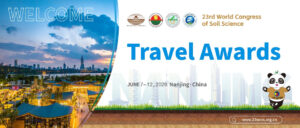
Travel Awards for Attending World Congress of Soil Science 2026
The International Union of Soil Sciences (IUSS) and Soil Science Society of China (SSSC) are pleased to offer travel awards to support early-career scientists who wish to participate in the 23rd World Congress of Soil Science (WCSS2026) from 7-12 June 2026, in Nanjing China. This initiative aims to encourage the participation of promising graduate students and early-career researchers by providing financial assistance to help cover travel and registration expenses.
A total of 40,000 USD in funding is available, aiming for gender and geographic equity. Each selected applicant will be eligible to receive up to a maximum of 1,000 USD. The award will be disbursed as a reimbursement for actual travel costs and/or WCSS2026 registration fees incurred.
Support is only for early-career scientists who are high-quality Master or PhD students or who completed a Master or PhD degree less than 5 years ago.
Applicants must be the presenting author of a submitted oral or poster presentation abstract for WCSS2026 and must be a member of a council society (national soil science society) that is a full member of IUSS.
Applicants need to send their applications to: wcss2026@issas.ac.cn
All applications must be submitted in English and must include the following:
a) Application letter, in PDF format, specifying the amount of funding requested (max. 1,000 USD).
b) CV including gender, education, country of residence, publication list in PDF format, maximum two pages.
c) Abstract and its received confirmation for WCSS2026.
d) Proof of student status or copy of Master’s/PhD certificate.
e) Confirmation letter from your national soil science society verifying your membership
A dedicated evaluation committee, composed of selected members of the IUSS and SSSC Executive Committee, will review all applications. Successful applicants will be notified via email by the WCSS2026 organizing committee no later than 28 February 2026 (UTC+8).
The results will also be announced on the WCSS2026 (https://www.23wcss.org.cn/) and IUSS (https://www.iuss.org) official website. The decision of the evaluation committee will be final and no discussion on the outcome will be entered into.
Deadline: 24:00 (UTC+8) on 31 December 2025.
Contact: wcss2026@issas.ac.cn or +86-025-86881992
Attendance Grant for Council Member Representatives from Low- and Middle-Income Countries of World Congress of Soil Science 2026
The International Union of Soil Sciences (IUSS) and the Soil Science Society of China (SSSC) are pleased to announce the Attendance Grant for the World Congress of Soil Science 2026 (WCSS2026). This initiative is designed to support the representatives of IUSS Council members from low- and middle (lower-middle and upper-middle) income countries ( as classified by the World Development Indicators), enabling their participation in the Congress, which will take place from 7–12 June 2026 in Nanjing, China.
This funding aims to encourage and assist representatives of IUSS Full Member from less developed countries who are constrained by limited budgets to attend the Congress. A limited number of funding (approximately 20) will be granted. Each selected applicant will receive up to USD $3,000 to cover eligible expenses such as registration fees, flight tickets, and accommodation.
Successful applicants will be notified via email by 28 February 2026 (UTC+8). The results will also be published on the official WCSS2026 website (https://www.23wcss.org.cn/) and the IUSS website (https://www.iuss.org).
The decision of the Selection Committee is final and not subject to appeal.
Eligibility Requirements: Applicants must be nominated by an IUSS Full Member (a National Soil Science Society or a National Academy). Each society can nominate only one candidate.
Submission and Deadlines: Applications must be submitted in English to wcss2026@issas.ac.cn 24:00 (UTC+8) on 7 February 2026.
For any inquiries, please contact wcss2026@issas.ac.cn or call +86-025-86881992.
The Digital Age in the Study, Evaluation, and Teaching of Soil Science
Special session number 503003 IUSS 23rd World Congress on Soil Science
In the digital transformation era, we invite researchers and professionals to participate with us in this innovative session exploring the convergence between cutting-edge technologies and soil sciences. This pioneering session will address how digital tools revolutionize our understanding, management, and teaching of soil sciences. Participants will be able to observe the largest augmented and mixed reality applications that allow soil profiles to be visualized in real-time, facilitating on-site analysis and improving educational experience in the field. We will explore the development of mobile applications focused on soil resources, as well as the potential presents by the use of artificial intelligence, machine learning, and advanced image analysis systems focused on soil sciences. This session represents a unique opportunity to establish international collaborations between soil scientists, software developers, and technology experts. Attendees will be able to share experiences on the implementation of innovative technological solutions in soil research and discuss the potential of these tools to address global challenges in soil conservation and sustainable management. In this sense, we are seeking contributions that highlight recent technological developments, successful case studies, and innovative proposals that combine soil sciences with these emerging technologies. This session will undoubtedly be a catalyst to inspire the next generations and foster the development of collaborative projects that harness the power of technology to advance our understanding of soils systems. Join this space where scientific tradition converges with digital innovation, creating new possibilities for research, education and soil management.
Contact: fernando.ayala@comunidad.unam.mx; leptosol@ciga.unam.mx
Mitigating the impact of land use and its change through conservation management
Call for Papers
Submission deadline: August 1st, 2026
Special issue as IUSS (International Union of Soil Sciences) Commission 4.3 – Soils and Land Use Change with Dr. Gary Feng.
We welcome original papers and reviews that might be presented at the 23rd World Congress of Soil Science held in Nanjing, China, on June 7-12, 2026.
Soils are vital for supporting agriculture, mitigating environmental quality, and provision of ecosystem services. Healthy, functioning soils are the keystone to global sustainability of ecosystems and land-based human activities, and for providing healthy environments for humankind.
The selected papers will mainly report the latest achievements in research focused on conservation, restoration and improvement of land use and its change through conservation managements, focused on promoting the sustainability of managed and natural ecosystems.
Keywords: soil health, land use change, soil amendment, cover crops, conservation management, soil functions, soil properties, carbon dynamics
Guest Editors:
Prof. Gary Feng
USDA-ARS
United States
Prof. Felipe A. Zúñiga Ugalde
Universidad Austral de Chile; Instituto de Bosques y Sociedad
Chile
Prof. Ying Ouyang
USDA Forest Service; Southern Research Station
United States
Prof. José Dörner
Universidad Austral de Chile; Instituto de Ingeniería Agraria y Suelos
Chile
Dr. Tingting Chang
Hohai University
China
Prof. Rainer Horn
Institut für Pflanzenernährung und Bodenkunde; Christian-Albrecht-Universität zu Kiel
Germany
Dr. Ingrid Martínez
Instituto de Investigaciones Agropecuarias (INIA-Chile)
Chile
Read more: https://bsssjournals.onlinelibrary.wiley.com/hub/14752743/call-for-papers/si-2025-001332
News from national and regional soil science societies 2026
German Soil Science Society (DBG)
Centennial Celebration: 100 Years of the German Soil Science Society (DBG)
Date: February 24th, 2026
Location: Hanover, Germany
On 24 February 2026, the German Soil Science Society (Deutsche Bodenkundliche Gesellschaft, DBG) marks the 100th anniversary of its founding. Established in Berlin in 1926 as a section of the International Society of Soil Science (IBG)—the predecessor of today’s International Union of Soil Sciences (IUSS)—the DBG has been internationally embedded from the outset. Over the past century, it has become a key scientific society for advancing soil science in Germany, fostering international exchange, supporting early-career scientists, and strengthening the dialogue between research, policy, and society.
To commemorate this milestone, the DBG and the Federal Institute for Geosciences and Natural Resources (BGR) jointly invite you to the anniversary ceremony on 25 February 2026 (from 13:00) at the BGR in Hannover, Germany.
The scientific programme brings together reflections on the Society’s history with perspectives on current and emerging research priorities, including:
• Continuities and turning points in 100 years of DBG history (K.H. Feger)
• Artificial intelligence and the evolution of digital soil mapping (T. Scholten)
• Soil science at the European Commission’s Joint Research Centre (1992–2025) (L. Montanarella)
• Milestones in research on soil organic matter (I. Kögel-Knabner)
• Current understanding of microplastics in soils and ecosystems (M. Rillig)
• Historical and geopolitical perspectives on Chernozem/Black Soils and resource conflicts (J. Arend)
• Changing approaches to outreach and soil-related science communication over time (S. Medwedski)
Read more: https://eveeno.com/259128352
https://www.dbges.de/
German Soil Science
Rendzina – Soil of the Year 2025 in Germany
For 20 years now, the “Soil of the Year” has been selected by the board “Soil of the Year”, composed of members of the German Soil Science Society (DBG), the Federal Soil Association (BVB), and the Engineering Association for Contaminated Site Management and Land Recycling (ITVA). Each year, the selected soil is officially presented on World Soil Day, December 5, during a ceremony in the capital Berlin. The initiative is also strongly supported by the German Environment Agency (UBA).
The goal of the campaign is to raise public awareness of soils as vital natural resources. Through posters, flyers, brochures, websites, and exhibitions, it aims to engage a broad audience. Over the course of the year, a variety of events—including excursions and exhibitions—are organized by institutions at both regional and local level.
Over the past two decades, the focus of the campaign has shifted from a purely taxonomic presentation of specific soil types to a broader ecological perspective. It now highlights different land use systems and their interactions with soil. In 2023, the focus was on arable soils, emphasizing the importance of healthy food production. In 2024, forest soils were selected as “Soil of the Year”, drawing attention to carbon sequestration and water-related ecosystem services.
The Soil of the Year 2025 is the Rendzina—a shallow, humus-rich soil type that forms on limestone, dolomite, or gypsum bedrock, roughly corresponding to Rendzic Leptosols according to WRB. This year’s patron is Dr. Till Backhaus, Minister for Climate Protection, Agriculture, Rural Areas, and the Environment of the German federal state of Mecklenburg-Western Pomerania. Accordingly, special attention is being given to Rendzinas formed on Cretaceous limestone in the Baltic Sea region.
At the official presentation in Berlin, Dr. Backhaus highlighted that Rendzinas are more than just productive land for agriculture or forestry. They also serve as “habitats, geology you can touch, and a valuable part of our natural and cultural heritage.”
To explore these aspects further, a multi-day expert excursion will take place at the end of May, including a visit to the UNESCO World Heritage Site of the Jasmund beech forest with its iconic chalk cliffs on the island of Rügen. The tour is being organized by the State Office for Environment, Nature Conservation and Geology of Mecklenburg-Western Pomerania together with the German and Danish Soil Science Societies. On the Danish island of Møn, the participants will also have the opportunity of cross-border comparisons of Rendzina sites.
Read more: https://www.dbges.de/en/soil-of-the-year and visit the Soil of the Year page and the UBA Soil of the Year page
Field International Workshop on Paleopedology “Deciphering the ancient anthropic landscape transformation in the southern Maya lowlands in Mexico”
Date: February 19th – 25th, 2026
Location: Palenque, Mexico
The objective of the workshop is to show different landscapes occupied by the ancient Mayas, from the northern alluvial plain of the Usumacinta River, where people mainly developed small and rural towns, to the highlands at Sierra de Chiapas, where monumental and well-organized cities were constructed. The workshop will consist of two-day conferences and five days of field excursions. During the first two days of the workshop, oral and poster presentations will be conducted.
The scientific topics include:
– Soil memory: a key guide for understanding past environmental and human impacts.
– Micromorphology of key pedogenetic processes. Linking microscopic observations and analytical data for differentiating anthropic and natural soil processes.
– Classification of soils in archaeological sites.
– Pedogenesis of anthropogenic soils and ecosystems.
– Novel methods and techniques and quantitative approaches in paleosol studies.
Conference Organizers:
– International Union of Soil Science, Division 1. Soil in Space and Time, Commission 1.6 – Paleopedology.
– International Union for Quaternary Research, INQUA Paleopedology Working Group.
– Instituto de Geología, Universidad Nacional Autónoma de México (UNAM).
– Instituto de Ecología A.C. (INECOL).
Important dates:
February 18, 2026: Arrival of participants
February 19-25, 2026: Workshop activities
February 26, 2026: Departure of participant
Read more: https://sites.google.com/view/paleopedology/events/events-2026
Canadian Society of Soil Science and Canadian Society of Agronomy
2026 Joint Annual Meeting – Soils & Crops in Focus – Critical Resources from Coast to Coast to Coast
Date: June 20th – 25th, 2026
Location: University of Guelph, Canada
Joint meeting of the Canadian Society of Soil Science and the Canadian Society of Agronomy. This conference, with its theme of “Soils & Crops in Focus – Critical Resources from Coast to Coast to Coast” will address the importance of resilient and healthy food production throughout Canada. Spanning six days, this conference brings together researchers, academics, professionals, contractors, suppliers, and students for technical and scientific discussions, and to showcase the state of the art in soil and crops research.
Deadline & Submission Information: January 31st, 2026
Proposals must be submitted to CSSSCSA2026@uoguelph.ca in MS Word format. Results of a review of proposals will be emailed in early February, 2026.
Read more: https://event.fourwaves.com/cssscsa2026/pages
Conferences, Meetings and Workshops 2026
Conference on Variable Charge Soils
Date: March 4th – 6th, 2026
Location: Newcastle, Australia
This specialized conference will focus on the unique properties of variable charge soils, which play a critical role in nutrient dynamics, contaminant interactions, and sustainable agriculture, particularly in tropical and subtropical regions. The event will highlight new advances in soil chemistry, management strategies, and their implications for food security and environmental protection. This conference is organized noting that we rarely take into consideration the differences in surface chemical properties of soils when designing management strategies- be these for fertility management or contaminants.
Read more: https://2026variablechargesoilconference.com/
The 4th Global Soil Biodiversity Conference (GSB 2026)

Date: April 12th -15th, 2026
Location: Victoria, British Columbia, Canada
The Global Soil Biodiversity Initiative (GSBI) was established to promote expert knowledge on soil biodiversity and to link this into environmental policy and sustainable land management with the aim of protecting and enhancing ecosystems services. The Global Soil Biodiversity Conferences organized under the auspices of the GSBI are now considered to be the premier global conferences dealing with soil biodiversity. The 4th edition of the Global Soil Biodiversity Conference (GSB 2026) will bring together researchers, policy analysts, students, and practicing farmers to discuss soil biodiversity with the goals of informing the public, promoting this information into environmental policy, and overall creating a platform for the current and future sustainability of soils.
Full list of oral presentation and poster session themes for abstract submission:
1. Soil Biodiversity Under Threat
2. Soil Biodiversity as Nature-Based Solutions
3. Soil Biodiversity Science: From Theory to Practice
4. Innovations in Soil Biodiversity Research
5. Patterns in Soil Biodiversity: Space and Time
6. Soil Biodiversity Across Systems and Taxa
7. From Research to Action: Policy, Health & Society
Key Dates:
– January 30th, 2026: Late Breaking Poster Abstract Submission Deadline
– February, 2026: Acceptance Notification
– February 16th, 2026: Regular Registration Deadline
Read more: https://globalsoilbiodiversity2026.org/
10th International Symposium on Soil Organic Matter (SOM2026)
Date: May 25th – 29th, 2026
Location: University of São Paulo (USP), Brazil.
The X International Symposium on Soil Organic Matter (SOM2026) represents a unique opportunity to bring together the world’s leading scientific authorities in the areas of soil organic matter, carbon, regenerative agriculture, sustainable livestock, forestry and ecosystem restoration.
Under the theme “The Nexus of Healthy Soils and a Sustainable Future”, SOM2026 will bring together leading scientists, students, and professionals to discuss the latest advances in soil organic matter research and its pivotal role in addressing global sustainability challenges.
Read more: Official website = https://eventosccarbon.com.br
100 th anniversary of agricultural experimentation at the Warsaw University of Life Sciences – SGGW
Date: June 12th –13th, 2026
Location: Warsaw University of Life Sciences – SGGW, Poland
The conference will provide a platform for discussion and presentation of results in various fields, including agricultural sciences, agricultural chemistry, soil science, environmental sciences, and biological sciences, among others. The conference will focus on demonstrating the role that long-term experiments play in agricultural and environmental sciences, in society and in creating agricultural development strategies in changing climatic conditions.
Conference topics
– The impact of long-term agricultural practices on the environment
– Soil quality characteristics, biodiversity, and plant yield in various agricultural, tillage, and fertilization systems
– The importance of fertilization in shaping plant yields
– Novel methods for increasing fertilization efficiency
– Transformations of fertilizers in various soil conditions
– The use of wastes as fertilizers
– Quantitative and qualitative changes in soil organic matter under diverse soil use conditions
– Application of precision farming tools in on-farm experiments
– The importance of permanent meadows and pastures in feed production in various farming systems
– Modern statistical methods in agricultural experimentation
Important dates
Deadline for registration: January 15th, 2026
Deadline for conference fee payment: January 30th, 2026
Deadline for articles and abstracts submission: February 15th, 2026
The announcement of the final conference program: April 30th, 2026
Full papers can be published in the Soil Science Annual (IF 2024: 1.0) journal. Articles should be prepared according to the Guide for authors available at https://www.soilsa.com/Guide-for-authors,1881.html
The papers will undergo a standard editorial and review procedure applied in the journal.
Read more: https://ir.sggw.edu.pl/en/lte/
IFSA2026: Farming and Agri-Food Systems dynamics: facing crises and trade-offs in transition pathways
Date: June 29th – July 03rd, 2026
Location: Montpellier, France
As pressures from climate change, biodiversity loss, market uncertainty, and rising global food demand escalate, there is a growing need to consider how agricultural systems can be enhanced and reconfigured to withstand external shocks while advancing ecological, social, and economic sustainability. Responding to current crises calls for structured approaches that guide farmers, stakeholders, advisors, researchers, consumers and policymakers toward systemic solutions that address these overlapping challenges.
Various initiatives incite stakeholders and policy makers to innovate and develop multi-scale and multi-domain adaptation strategies for the agri-food systems. This implies to improve farmland environmental performance using sustainable practices, to reduce their CO2 emissions, and to protect the means of subsistence of farm households as well as natural resources, in particular water and soil, from the effects of climate change.
This symposium aims to revisit progress and debates in co-designing and promoting sustainable Agri-Food systems to face crises and support multiscale decisions. There are many trade-offs to document but also many synergies to analyse when looking at transition pathways and impacts.
Key dates
15/02/2026 Authors are informed on short paper acceptance
15/03/2026 Early bird registration deadline
30/04/2026 Registration deadline (also for field visits registration)
Read More: https://ifsa2026.sciencesconf.org/resource/page/id/3
12th SCAR Open Science Conference & Meetings
Date: August 10th –14th, 2026
Location: Oslo, Norway
The 12th SCAR Open Science Conference will be held in Oslo, Norway, from 10-14 August 2026, hosted by the Norwegian Polar Institute. The conference will feature an interdisciplinary programme that includes plenary lectures, parallel sessions, mini-symposia, workshops, panel discussions, posters, and social activities.
e-mail: osc@scar.org
Read more: OSC 2026 – Expression of interest
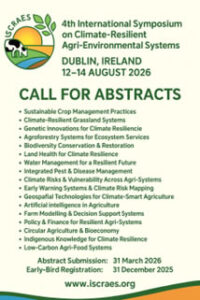
4th International Symposium on Climate-Resilient Agri-Environmental Systems (ISCRAES 2026)
Date: August 12th –14th, 2026
Location: Dublin, Ireland
The main theme of the ISCRAES 2026 is “Land Health Nexus: Cultivating Climate Resilience and Sustainable Agri-Environments”, leading to achieving the primary objective of agro-environmental sustainability by tackling the current major environmental, climate, and societal challenges facing the world.
Minimising potential impacts represents a big challenge for the agri-food sector, given the need to significantly enhance food production. To meet the dual challenge of enhancing food production whilst minimising the environmental impact in line with the EU Climate Action and UN-SDGs, cooperationwith stakeholders from both the public and private sectors is required.
This conference will provide a platform to discuss the scientific and technical aspects of the range of cross-cutting issues associated with the environmental impact of agriculture, including public perception, regulatory and socio-economic factors.
With 18 multidisciplinary scientific sessions covering cutting-edge research and solutions, ISCRAES 2026 will bring together global experts, innovators, and policymakers to address today’s most pressing environmental, climate, and societal challenges, all with the shared vision of agri-environmental sustainability.
Important Deadlines:
– Submitting abstracts, Final: 31 March 2026
– Early bird registration: 31 January 2026
– Standard registration: 30 April 2026 (For inclusion in the proceedings and programme)
– Late registration fee: 31 July 2026
Read more: www.iscraes.org
International Symposium on Earthworm Ecology (ISEE13)
13th edition
Date: August 23rd-28th, 2026
Location: Wageningen, the Netherlands
This year’s theme, “From the lab to the field, from the field to the lab”, reflects the commitment to bridging the gap between experimental and real-world studies, both of which are essential to the advancement of earthworm research. ISEE13 will offer a dynamic platform for knowledge exchange, with a strong focus on early-career researchers who are at the forefront of addressing global challenges impacting or affected by earthworms.
Important deadline:
Opening registration: December 1, 2025
Deadline abstract submission: January 4th, 2026
Decision on abstract acceptance: March 4th, 2026
Deadline for early bird registration: April 15th, 2026
Deadline for registration: June 17th, 2026
Read more: 13th International Symposium on Earthworm Ecology – Home
10th International Nitrogen Conference (N2026)
Sustainable Nitrogen Management for Future Generations
Date: November 2nd-6th, 2026
Location: Wageningen, the Netherlands
The 10th International Nitrogen Conference (N2026) aims to foster global collaboration under the theme “Sustainable Nitrogen Management for Future Generations.” While coordination between science and policy is essential, effectively addressing the nitrogen challenge requires the active engagement of all stakeholders, including governments, researchers, educators, industry, civil society, and the public.
We warmly welcome participants from around the world –across disciplines, sectors, and regions –who share a commitment to building a sustainable future. This conference will serve as an inclusive platform for sharing knowledge, aligning actions, and co-creating the Kyoto Declaration, a collective roadmap toward sustainable nitrogen management.
Read more: https://www.initrogen.org/events/n2026—kyoto—2—6-november-2026
Opportunities
6th Course on Statistical Methodology for Agricultural Sciences «Dario Sacco» – Italian Society of Agronomy LINEAR AND GENERALIZED LINEAR MODELS
Date: January 26th – 30th, 2026
Location: Dipartimento di Scienze Agrarie e Ambientali of the Università degli Studi di Milano (Aula Gamma Lab.) via Celoria 18, Milan, Italy
The course is organized by the Italian Society of Agronomy (SIA). The course will include both practical and theoretical lessons every day from 9:00 AM to 1:00 PM and from 3:00 PM to 6:30 PM.
The course includes both theoretical and practical components, with various applications in the agronomic sector. The software used will be R, available at https://cran.r-project.org/ for all operating systems. Participants are expected to have R installed on their computers, along with the packages that will be specified after registration. As prerequisites, participants should have basic knowledge of R and statistics (fundamental elements of descriptive and inferential statistics).
Read more: https://siagr.it/wp-content/uploads/2025/11/SIA_flyer_statistica_milano-1_ok_ok.pdf
Agricultural Chemistry Winter School “Soil-Plant-Microbiome functionality and adaptation to anthropogenic stress and climate change”- ACWS2026 –
Date: February 2nd –5th, 2026
Location: DAMSlab Auditorium, Piazzetta Pasolini 5b, Bologna, Italy
The Winter School, organized by the Italian Society of Agricultural Chemistry (SICA) and the Department of Agricultural and Food Sciences at Alma Mater Studiorum—University of Bologna, is offered to doctoral students, postdoctoral researchers, and early-stage researchers.
The interconnected challenges of climate change, anthropogenic activities, and the need to sustain a growing global population are increasingly compelling the need for a comprehensive approach to the soil-plant-microbiome system, necessitating consideration from both agronomic and environmental standpoints. Notably, extreme rainfall events, which are characterized by the occurrence of landslides and flooding, are becoming increasingly prevalent. These events are interspersed with prolonged drought periods, which complicate and economically burden the process of harvesting crops. Consequently, it is imperative to prioritize the enhancement of soil resilience and resistance and the protection of the ecological value of the soil-plant system.
In this regard, the field of agricultural chemistry plays a pivotal role by facilitating the identification of management strategies for the soil-plant-microbiome system.
These strategies are to be aligned with prevailing policies that are oriented towards environmental sustainability and the promotion of a circular economy. The utilization of organic-based fertilizers, biostimulants, nanofertilizers, growth-promoting microorganisms, and biodegradable bioplastic as alternatives to conventional plastics constitutes a series of winning strategies that have the potential to maintain or enhance soil fertility and quality, as well as promote plant growth and enhance their nutritional value.
School Organizer: martina.mazzon2@unibo.it
School Administration: valeria.taraborell3@unibo.it
Read more: https://site.unibo.it/acws-2026/en/the-school
New Books
Pathways towards a just transition in agrifood systems
Policy Brief
By FAO, Rome, Italy; 2025
Despite their critical role in climate action, agrifood systems have not been integrated into just transition policy debates under the UNFCCC, and are rarely included in national just transition plans. But these gaps could be overcome at COP30 if Parties recognise the critical importance of resilient, inclusive agrifood systems transformation for achieving a just transition in their deliberations. This policy brief makes the case for placing agrifood systems transformation at the heart of just transition debates and policy making. It proposes an evidence-based framework for pursuing a just transition in agrifood systems that is aligned with the change pathways of the Paris Agreement 2 that can guide national policy making and offers key policy recommendations for Parties and observers at COP30.
Keywords: agrifood systems, climate change mitigation, climate resilience, rural communities, food security, transformation, sustainable development
DOI: https://doi.org/10.4060/cd7550en
Read more: https://openknowledge.fao.org/items/bede5b09-d960-41a3-9a44-7fe2f60c62d6
Holistic strategies for sustainable buildings and their impacts on soil and environmental health
By Jain, H., Dhupper, R. J Build Rehabil 11, 10 (2026).
In order to combat climate change and environmental deterioration, it is now more important than ever to use sustainable building approaches that take into account ecological factors in addition to energy efficiency. In the context of net-zero emissions in building design and management, this study evaluates how soil and environmental health are integrated. The study looks at ways to improve soil performance, lower carbon footprints, and foster ecological resilience because it acknowledges how important built environments are in affecting ecosystem services. To assess the effectiveness of sustainable building systems in various contexts, a mixed-methods approach is used, which includes case studies, surveys, and simulations. The results show how the combination of water conservation, waste reduction, green building materials, and renewable energy integration can improve soil quality, increase carbon sequestration, and reduce environmental contaminants. In addition, the study highlights potential and obstacles for applying these tactics in a range of socioeconomic and geographic circumstances. In line with the Sustainable Development Goals of the UN and the One Health concept, this study offers practical advice to policymakers, engineers, and architects on how to promote sustainable urbanisation while maintaining the integrity of the soil and environment.
DOI: https://doi.org/10.1007/s41024-025-00688-4
Soil proprieties and tomato (Solanum lycopersicum L.) responses to sewage sludge agricultural amendment: Environmental and health risks assessment
By Abdelmajid Achkir, Abdelhakim Aouragh, Mohammed El Mahi, El Mostapha Lotfi, Maâmar Yagoubi, Abdelaziz Smouni, Taruvinga Badza, Mohammed EL Bouch, Moulay Lahcen Ouahidi, Tawfik EL Moussaoui. Environmental Pollution and Management, Volume 3, December 2026, Pages 11-23
The aims of this research are to assess the impact of the application of sewage sludge as an agricultural amendment on the soil properties and growth of tomato (Solanum lycopersicum L.) in semi-arid climatic conditions in Morocco. This research also assessed the potential uptake of heavy metals (Cu, Pb, Ni, Cr, Zn) by tomato grown in a clay-loam textured soil amended with different sludge-soil ratios (0 %, 10 %, 30 %, 70 %, and 100 %). Significant improvements (p < 0.05) in soil parameters were observed in all treatments. Heavy metal concentrations were significantly higher in the roots than in the aerial parts of the tomato, with the stems showing intermediate values. Heavy metal uptake was analyzed in fruits, leaves, stems and roots. A key observation of this study was that cadmium (Cd) and nickel (Ni) – both metals known for their solubility and mobility – were not detected in fruit at any level of treatment, unlike in other parts of the plant. Transfer factor (TF) analysis revealed the following patterns: Cr > Zn > Cu > Pb > Ni in roots and Zn > Cu > Cr > Pb in fruits, indicating a low risk of heavy metal transfer to edible parts. The risk of soil contamination was assessed using geo-accumulation indices, contamination factor (CF), pollutant load index (PLI) and potential ecological risk (PER). These indices confirm the safety of sewage sludge application, as the results of the pollutant load index and potential ecological risk indicate low to moderate risks of heavy metal contamination.
DOI: https://doi.org/10.1016/j.epm.2025.09.004
Communication
To IUSS Commission and Working Group Chairs: you are kindly requested to inform the Secretariat whenever there is a change within your Commission and/or Working Group officers. In this way, it will be possible to keep the IUSS Officers Mailing List regularly updated.
To IUSS Full Members: please do not forget to let the Secretariat know about your new President, Secretary, Contact Person. This will be vital in keeping the mailing list updated, so you will not miss out any communication.
Please provide the new name, surname, position and e-mail address to: iuss.secretariat@crea.gov.it
If you are interested in promoting your product or book, event, job call in our Alert, please send an email to iuss.secretariat@crea.gov.it.
You must be logged in to post a comment.