

State of the art
The IUSS Divisions, Commissions and Working Groups Chairs can now share their publications on the IUSS Alert. Every month, send your publications to the Secretariat and they will be published here. Please do so by the 15 of every month to make sure your articles are published in the monthly current issue. Let’s keep our community posted on the progress of Soil Sciences.
Highlighted IUSS publications
By Division 3
Integrating stable isotopes and hydrogeochemical indices for vulnerability assessment of extensively irrigated Kala Oya basin, Sri Lanka
By S. Himanujahn, H.D.N. Jayaweera, E.A.N.V. Edirisinghe, B.C.L. Athapattu, Morihiro Maeda, Rim Trabelsi, K.H. Hagagg, T. Vitvar, Iñaki Vadillo-Pérez, C. Carreon-Diazconti, Zhonghe Pang, Md Arzoo Ansari, Paston Sidauruk, M.L. Lima, U. Saravana Kumar, Meththika Vithanage
Journal of Contaminant Hydrology, Volume 273, July 2025, 104596
This study, published in the Journal of Contaminant Hydrology, represents a significant advancement in environmental hydrogeology. By innovatively integrating the DRASTIC-LU model with stable isotope analysis and a novel Global Index (GI), it provides a holistic and robust framework for assessing groundwater vulnerability and irrigation suitability. The research demonstrates that groundwater in the agriculturally critical Kala Oya basin is moderately vulnerable and currently suitable for irrigation, with wet-season susceptibility linked to return flows. Crucially, the work bridges a key methodological gap by combining hydrochemical and isotopic tools, offering a powerful, transferable model for sustainable water resource management in intensively irrigated regions worldwide. The findings provide immediate, evidence-based guidance for local stakeholders while establishing a new benchmark for integrated water quality assessment.
https://doi.org/10.1016/j.jconhyd.2025.104596
Balancing yield and environmental impact: The role of split nitrogen application and fertilizer type in corn production
By Iglesias, M. P. Wyngaard, N.; Lewczuk, N.; Sainz Rozas, H. R.; Toribio, M.; Garcia F. O. Reussi Calvo N. i.
Agriculture, Ecosystems & Environment, Volume 392, 15 October 2025, 109756
This article, published in the high-impact journal Agriculture, Ecosystems and Environment, is highly recommended for its immediate relevance and comprehensive scope. It addresses the core, global agricultural challenge of optimizing nitrogen (N) management—a critical factor for both food security and environmental sustainability. The study provides actionable insights by directly comparing split N application strategies and different fertilizer types in corn production, evaluating their effects not only on yield but also on greenhouse gas emissions (specifically nitrous oxide, N₂O). This integrated approach of assessing productivity alongside environmental impact makes its findings particularly valuable for agronomists, farm advisors, and policymakers aiming to develop practical, sustainable farming practices. The research methodology and conclusions are directly applicable to improving nutrient management plans in similar cropping systems worldwide.
https://doi.org/10.1016/j.agee.2025.109756
Weather stress events during growing seasons associated with large losses in final soybean yields and changes in soil carbon content and nitrogen fertility under a warming climate: a review and synthesis of 1990–2012 soybean production in a rotated field in Daisen, Japan.
By Yoneyama, T., Nishida, M., Nira, R., Nakano, S.
Soil Science and Plant Nutrition, Volume 71, Issue 4 (2025)
This article is highly recommended for its critical and forward-looking synthesis of long-term field data. In an era defined by climate change, it moves beyond typical agronomic studies by directly linking increasingly frequent weather stress events to tangible losses in soybean yield and detrimental shifts in foundational soil health parameters (carbon and nitrogen). The analysis of a 22-year dataset provides exceptional empirical weight, offering a localized yet universally valuable case study on the cascading impacts of a warming climate on crop productivity and soil sustainability. Its findings are urgent and actionable for agronomists, climate adaptation researchers, and policymakers focused on future-proofing agricultural systems.
https://doi.org/10.1080/00380768.2025.2492793
MEDAL
Guy Smith Medal Award 2026 – Invitation to Propose Nominees by February 28, 2026
Dear Colleagues:
The Guy Smith Medal is awarded for outstanding contributions to the development of soil classification.
The IUSS Guy Smith Medal Award Committee is pleased to invite you to propose nominees for the forthcoming Guy Smith Medal Award:
https://www.iuss.org/awards-medals-and-prizes/guy-smith-medal/
The next award will be handed over during the Nanjing 23rd World Congress of Soil Science (https://www.23wcss.org.cn/), to be organized from June 7 to 12, 2026 by the Soil Science Society of China.
Criteria for selection:
The nominee should have the following qualifications:
1. She/he must have made a significant scientific contribution that has advanced the field of soil classification, and
2. Be a published author in the field of soil classification, and
3. Be an active member, Honorary member, or formerly active member of a national or international soil science professional society, and
4. The medal is not invested posthumously, and
5. Present officers of IUSS Commission Soil Classification cannot be nominated.
The proposal for nomination should comprise a short text, including the main steps of the scientific career of the nominee, her/his most relevant scientific publications and major contributions to the development of soil classification.
We look forward to receiving your proposals by February 28, 2026.
CVs of the nominees and a motivation letter should be sent to:
Peter Schad <peter.schad@tum.de>, with copy to Maria Gerasimova <maria.i.gerasimova@gmail.com> and to Lucia Anjos <lanjos@ufrrj.br>
Yours Sincerely,
Prof. Peter Schad
Chair of Soil Science
Technical University of Munich, Germany
Prof. Maria Gerasimova
Department of Soil Geography and Landscape Geochemistry
Faculty of Geography, Moscow Lomonosov State University
Moscow, Russia
Prof. Lúcia Helena C. Anjos
Soils Department, Federal Rural University of Rio de Janeiro (UFRRJ)
Seropédica, Rio de Janeiro, Brazil
News from the IUSS
Decade of Soil Sciences for Sustainable Development 2025-2034 – Healthy Soils for Humanity
The new decade of soil sciences for sustainable development has begun, read the manifesto and download the logo here: https://www.iuss.org/decade-of-soil-sciences-for-sustainable-development/
The Decade aims to prioritize production, dissemination, and use of actionable scientific knowledge across all areas of soil sciences to support the achievement of the Sustainable Development Goals (SDGs).
Divisions, Commissions, and Working Groups are encouraged to coordinate with the IUSS Research Forum in planning activities aligned with the themes of the Decade. These may include special issues, books, position papers, policy briefs, webinars, conferences, workshops, sessions at the World Congress of Soil Science (WCSS), and other relevant initiatives.
Division and Commission Officers Election – 2026 and members of the Standing Committees Election 2026
The process for the election of the new Divisions and Commissions Officers and Chair of the Standing Committees has officially started, the IUSS Members have been notified by the Secretary and provided with the Guidelines for the procedure, the list of the available positions and the official nomination form. The elections will be completed at the very beginning of the new year, and the names and positions will be published on the IUSS Alert.
Election Calendar and Deadlines
Closing of the voting system for your society members: March 20, 2026
Notification to the Electoral Committee and Secretariat: within April 30, 2026
Winners’ announcement: within May 31, 2026
Download the Division and Commission Chair Nomination Form
Download the Standing Committee Member Nomination Form
Download the IUSS 2026 Election Guidelines
Candidates for the position of President-elect of the IUSS
The call for the candidacy to the position of IUSS President Elect is still open, for full info and procedure click here.
For any queries, please contact IUSS Secretary, Dr. Irene Fabbri, iuss.secretariat@crea.gov.it or the Chair of Presidential Election, Prof. Rainer Horn rhorn@soils.uni-kiel.de
IUSS International Soil Judging Contest
Soil judging is an educational activity that develops field skills of describing and classifying soils and understanding of soil genesis. The experiential learning and skills gained are beneficial in promotion of soil science, pursuit of jobs, and in preparation for advanced studies. Soil judging originated in the United States in the late 1950’s and IUSS contests began in Korea in 2014 in association with the World Congress. There have been numerous journal articles detailing the importance of soils contests as an educational tool. The International Soil Judging Contest Working Group of IUSS was formed in 2022 to promote soil judging across the world, to develop standards used for soil judging contests, to host International Soil Judging web page, and to assist in the planning and organization of international soil judging contests. The chair is Brian Needelman of the United States and vice-chairs are John Galbraith of the Unites States and Minerva García Carmona of Spain. A main focus of the group is to assist with the IUSS contests associated with the World Congress in Nanjing, China in 2026 and in Toronto, Canada in 2030. Registration of teams is still available until January 15, 2026, through the contest web site. There are about 36 members, and most are active on one of the subcommittees developing standards based on FAO, USDA, and WRB publications. Our working group encourages countries to develop their own or multinational contests. Participation in the Working Group is encouraged by sending an email to Dr. Brian Needelman bneed@umd.edu and Dr. John Gallbraith at ttcf@vt.edu or Minerva García Carmona minerva.garciac@umh.es. An example of a recent soils contest is available at Home – European Soil Judging Contest. The Working Group encourages development of soil judging and participation in the upcoming contest in Nanjing. Please feel free to reach out to one of the officers with any questions.
IUSS Joint Commission 1.7/3.8 “Permafrost-Affected Soils
Call for papers, Submission Deadline: Tuesday, September 1, 2026
We would like to draw your attention to a Special Issue, “Applied Pedology: Practical Solutions Across a Variety of Disciplines and Issues” in Soil Use and Management. The special Issue is framed within the IUSS initiatives of the Research Forum for the 2025-2034 Decade of Soil Sciences for Sustainable Development (DSSSD) (www.iuss.org/decade-of-soil-sciences-for-sustainable-development/). We’d like to extend an invitation for contributions to the special issue before the 1 September 2026 deadline.
For more information on the scope of the special issue, please refer to the Call for Papers (contributions accepted include, original research papers, reviews, reports of case studies and practical experience, opinions, and perspectives).
Manuscript can be submitted the SUM submission system. Please follow the Author Guidelines and select the special issue title when asked: “Is this submission for a special issue?”.
We would be enormously grateful if you could let us know your decision via this form.
For more information: Prof. Adrian Unc, aunc@mun.ca Vice-Chair
Alan Wild Reviews, Perspectives and Topical Collections Editor, Soil Use and Management (British Soil Science Society)
Soil Mission Manifesto
The Mission Soil Manifesto (https://mission-soil-platform.ec.europa.eu/community/mission-soil-manifesto) calls for action to respond to the urgent need to protect and improve soil health in Europe and beyond and bring together regional and local policymakers, stakeholders and citizens into a vibrant community that cares for soil health. It was launched by the EU Mission Soil on April 18, 2023, and it has been signed by the IUSS President, Prof. Victor O. Chude.
Soil Science Society of China (SSSC) and IUSS
The 23rd World Congress of Soil Science (WCSS) – Soil and the Shared Future for Humanity

Date: 7th -12th June, 2026
Location: Nanjing, China
Nanjing Welcomes Global Soil Scientists for the 23rd World Congress of Soil Science
Soil Science Society of China successfully won the bid to host the 23rd World Congress of Soil Science (WCSS) in Brazil’s 21st WCSS. For the first time, China as a host country invites global soil scientists to explore the centennial journey of soil science.
The 23rd WCSS will be held in the International Expo Center from June 7 to 12, 2026 in Nanjing, the capital city of the most developed Jiangsu province, under the theme of “Soil and the Shared Future for Humanity”. 121 sessions in five categories have been accepted.
Deprived from the Chinese character “土” (Soil), the mascot KuiKui manifests the concept of “One World for One Earth”. The emblem on its belly represents the earth, with the inner circle featuring five typical soil colors in China, while the outer circle featuring the blue ocean.

The World Congress of Soil Science is the most authoritative and influential international conference in the field, sponsored by the International Union of Soil Sciences. It is a major event for scientific and technological professionals in soil science and related disciplines worldwide to engage in academic exchange. Held every four years, the conference covers a wide range of topics and serves as a platform for exchange and collaboration among soil scientists from around the globe.
The WCSS2026 theme, ‘Soil and the Shared Future for Mankind’, focuses on the importance of soil for our future, with a variety of arrangements including poster exhibition, young researcher forum and soil judging contest. Tours will also be organized for participants to visit typical soils in combination with unique landscapes and cultural diversification as China is a vast country with rich soil resources.
With a global population that is projected to exceed 9 billion by 2050, our current and future food security hinges on our ability to increase yields and food quality using the soils that we already have available today. We are responsible for the soils that provide us with food, water and air, and we need to take action today to ensure that we have healthy soils for a sustainable and food secure future. Our understanding of the importance is developing rapidly and WCSS2026 provides a platform for us to discover the solutions to soil issues and an opportunity to connect all who work with and have interests in soils.
Read more: Join and follow via the official website: https://www.23wcss.org.cn/
Important dates and deadlines:
Abstract results notification: February 7, 2026
Early bird registration deadline: March 7, 2026
Regular registration deadline: May 7, 2026
Cancellation and Refund deadline: May 7, 2026
Post-Congress Tours
Invitation to participate in the exclusive Post-Congress Scientific Tours across China — where soil science meets stunning landscapes and cultural heritage. They are arranged six unique expedition routes covering key soils and regions, from the black soils of Northeast China to the tea gardens of Jiangnan, from the capital’s green city projects to the magnificent Danxia and Karst landforms. Each tour blends field observation, soil profiling, and local culture — guided by experts and designed for deep learning beyond the congress.
Choose your scientific journey:
Tour 1: Scientific Expedition on Red Soil in South China
Tour 2: Jiangnan Tea & Rice Soil Scientific Expedition
Tour 3: Survey on Soil Environment and Green City Construction in the Capital
Tour 4: Soil and Geoscience Expedition in the Loess Plateau & Historical-Cultural Tour
Tour 5: Northeast Thick Black Soil Region Scientific Expedition
Tour 6: Northeast Thin Black Soil Region Scientific Expedition
Explore routes, costs, and details here: https://www.23wcss.org.cn/Post-Congress%20Tours/index.html
IUSS and Soil Science Society of China (SSSC)
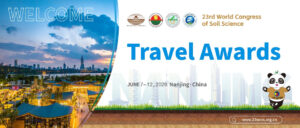
Travel Awards for Attending World Congress of Soil Science 2026
The International Union of Soil Sciences (IUSS) and Soil Science Society of China (SSSC) are pleased to offer travel awards to support early-career scientists who wish to participate in the 23rd World Congress of Soil Science (WCSS2026) from 7-12 June 2026, in Nanjing China. This initiative aims to encourage the participation of promising graduate students and early-career researchers by providing financial assistance to help cover travel and registration expenses.
A total of 40,000 USD in funding is available, aiming for gender and geographic equity. Each selected applicant will be eligible to receive up to a maximum of 1,000 USD. The award will be disbursed as a reimbursement for actual travel costs and/or WCSS2026 registration fees incurred.
Support is only for early-career scientists who are high-quality Master or PhD students or who completed a Master or PhD degree less than 5 years ago.
Applicants must be the presenting author of a submitted oral or poster presentation abstract for WCSS2026 and must be a member of a council society (national soil science society) that is a full member of IUSS.
Applicants need to send their applications to: wcss2026@issas.ac.cn
Contact: wcss2026@issas.ac.cn
Attendance Grant for Council Member Representatives from Low- and Middle-Income Countries of World Congress of Soil Science 2026
The International Union of Soil Sciences (IUSS) and the Soil Science Society of China (SSSC) are pleased to announce the Attendance Grant for the World Congress of Soil Science 2026 (WCSS2026). This initiative is designed to support the representatives of IUSS Council members from low- and middle (lower-middle and upper-middle) income countries ( as classified by the World Development Indicators), enabling their participation in the Congress, which will take place from 7–12 June 2026 in Nanjing, China.
This funding aims to encourage and assist representatives of IUSS Full Member from less developed countries who are constrained by limited budgets to attend the Congress. A limited number of funding (approximately 20) will be granted. Each selected applicant will receive up to USD $3,000 to cover eligible expenses such as registration fees, flight tickets, and accommodation.
Successful applicants will be notified via email by 28 February 2026 (UTC+8). The results will also be published on the official WCSS2026 website (https://www.23wcss.org.cn/) and the IUSS website (https://www.iuss.org).
The decision of the Selection Committee is final and not subject to appeal.
Eligibility Requirements: Applicants must be nominated by an IUSS Full Member (a National Soil Science Society or a National Academy). Each society can nominate only one candidate.
Submission and Deadlines: Applications must be submitted in English to wcss2026@issas.ac.cn 24:00 (UTC+8) on 7 February 2026.
For any inquiries, please contact wcss2026@issas.ac.cn or call +86-025-86881992.
The Digital Age in the Study, Evaluation, and Teaching of Soil Science
Special session number 503003 IUSS 23rd World Congress on Soil Science
In the digital transformation era, we invite researchers and professionals to participate with us in this innovative session exploring the convergence between cutting-edge technologies and soil sciences. This pioneering session will address how digital tools revolutionize our understanding, management, and teaching of soil sciences. Participants will be able to observe the largest augmented and mixed reality applications that allow soil profiles to be visualized in real-time, facilitating on-site analysis and improving educational experience in the field. We will explore the development of mobile applications focused on soil resources, as well as the potential presents by the use of artificial intelligence, machine learning, and advanced image analysis systems focused on soil sciences. This session represents a unique opportunity to establish international collaborations between soil scientists, software developers, and technology experts. Attendees will be able to share experiences on the implementation of innovative technological solutions in soil research and discuss the potential of these tools to address global challenges in soil conservation and sustainable management. In this sense, we are seeking contributions that highlight recent technological developments, successful case studies, and innovative proposals that combine soil sciences with these emerging technologies. This session will undoubtedly be a catalyst to inspire the next generations and foster the development of collaborative projects that harness the power of technology to advance our understanding of soils systems. Join this space where scientific tradition converges with digital innovation, creating new possibilities for research, education and soil management.
Contact: fernando.ayala@comunidad.unam.mx; leptosol@ciga.unam.mx
Mitigating the impact of land use and its change through conservation management
Call for Papers
Submission deadline: August 1st, 2026
Special issue as IUSS (International Union of Soil Sciences) Commission 4.3 – Soils and Land Use Change with Dr. Gary Feng.
We welcome original papers and reviews that might be presented at the 23rd World Congress of Soil Science held in Nanjing, China, on June 7-12, 2026.
Soils are vital for supporting agriculture, mitigating environmental quality, and provision of ecosystem services. Healthy, functioning soils are the keystone to global sustainability of ecosystems and land-based human activities, and for providing healthy environments for humankind.
The selected papers will mainly report the latest achievements in research focused on conservation, restoration and improvement of land use and its change through conservation managements, focused on promoting the sustainability of managed and natural ecosystems.
Keywords: soil health, land use change, soil amendment, cover crops, conservation management, soil functions, soil properties, carbon dynamics
Guest Editors:
Prof. Gary Feng
USDA-ARS
United States
Prof. Felipe A. Zúñiga Ugalde
Universidad Austral de Chile; Instituto de Bosques y Sociedad
Chile
Prof. Ying Ouyang
USDA Forest Service; Southern Research Station
United States
Prof. José Dörner
Universidad Austral de Chile; Instituto de Ingeniería Agraria y Suelos
Chile
Dr. Tingting Chang
Hohai University
China
Prof. Rainer Horn
Institut für Pflanzenernährung und Bodenkunde; Christian-Albrecht-Universität zu Kiel
Germany
Dr. Ingrid Martínez
Instituto de Investigaciones Agropecuarias (INIA-Chile)
Chile
Read more: https://bsssjournals.onlinelibrary.wiley.com/hub/14752743/call-for-papers/si-2025-001332
In memorial
Dr. Pedro Antonio Sanchez
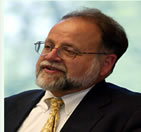 Dr. Pedro Antonio Sanchez was a renowned agricultural scientist specializing in tropical soils and a winner of the 2022 World Food Prize for his groundbreaking contributions to reducing hunger and malnutrition throughout the developing world by transforming depleted tropical soils into productive agricultural lands.
He was born in Havana, Cuba, on October 7, 1940, grew up on a farm and completed his elementary and secondary education from Havana’s Colegio de la Salle, and earned his BS in Agronomy (1962), MS in Soil Science (1964), and PhD in Soil Science (1968) degrees at Cornell University. He passed away on January 12, 2026.
As the leader of the North Carolina State University Rice Research Program of Peru in the 1970s, Dr. Sanchez helped guide Peru to dramatically improve its national food security, achieving self-sufficiency in rice production within three years, and achieving among the highest rice yields in the world. From 1971-1976, he developed a comprehensive approach to soil management which enabled 30 million hectares of the Brazilian Cerrado, to be brought into production the single largest increase in arable agricultural land in the last half-century. Dr. Pedro Sánchez brought the Green Revolution to Africa developing means to replenish crucial nutrients in exhausted soils, through the development and promotion of agroforestry.
For all of this, in recognition of his work, in addition to the World Food Prize 022, he received the International Soil Science Award from the Soil Science Society of America (1993), and the International Service in Agronomy Award from American Society of Agronomy (1993). He was also elected Chairman of the Soil Fertility and Plant Nutrition Commission of the International Society of Soil Science (1994) and received decorations from the governments of Colombia and Peru.
For the Latin American Soil Science Society (SLCS), this represents not only the loss of one of its members, but also the loss of a world-renowned scientist who embodied the commitment that science should have to global food security, a commitment he particularly demonstrated towards the developing countries to which he belonged.
Prof. Koji Wada
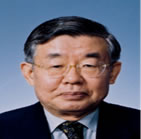 The IUSS mourns the loss of Honorary Member Prof. Koji Wada.
Prof. Wada Koji (Sixth Subsection, Soil Science) passed away on December 16, 2025.
Prof. Anthony Young (1932 – 2025)
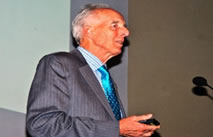 We honor the legacy of Professor Anthony (Tony) Young — a founder of the World Agroforestry Centre (ICRAF) and one of the world’s foremost experts on land resources — whose vision continues to guide our work today.
Professor Young was among the leading land resource specialists globally, publishing more than 150 scientific papers and 18 books, including the highly regarded and widely cited Agroforestry for Soil Management (1989) and Tropical Soils and Soil Survey (1978). Over a career spanning more than five decades, he worked in over 30 tropical countries, contributing across every facet of land resource development — from survey and evaluation to conservation, planning, and sustainable use.
For more on this remarkable scientist, thinker, and development practitioner, Professor Young’s autobiography, Semper Juvenis (Latin for “Forever Young”), tells the story of his life and his enduring impact.
News from national and regional soil science societies 2026
German Soil Science Society (DBG)
Centennial Celebration: 100 Years of the German Soil Science Society (DBG)
Date: February 24th, 2026
Location: Hanover, Germany
On 24 February 2026, the German Soil Science Society (Deutsche Bodenkundliche Gesellschaft, DBG) marks the 100th anniversary of its founding. Established in Berlin in 1926 as a section of the International Society of Soil Science (IBG)—the predecessor of today’s International Union of Soil Sciences (IUSS)—the DBG has been internationally embedded from the outset. Over the past century, it has become a key scientific society for advancing soil science in Germany, fostering international exchange, supporting early-career scientists, and strengthening the dialogue between research, policy, and society.
Read more: https://eveeno.com/259128352
https://www.dbges.de/
German Soil Science
Rendzina – Soil of the Year 2025 in Germany
For 20 years now, the “Soil of the Year” has been selected by the board “Soil of the Year”, composed of members of the German Soil Science Society (DBG), the Federal Soil Association (BVB), and the Engineering Association for Contaminated Site Management and Land Recycling (ITVA). Each year, the selected soil is officially presented on World Soil Day, December 5, during a ceremony in the capital Berlin. The initiative is also strongly supported by the German Environment Agency (UBA).
The Soil of the Year 2025 is the Rendzina—a shallow, humus-rich soil type that forms on limestone, dolomite, or gypsum bedrock, roughly corresponding to Rendzic Leptosols according to WRB. This year’s patron is Dr. Till Backhaus, Minister for Climate Protection, Agriculture, Rural Areas, and the Environment of the German federal state of Mecklenburg-Western Pomerania. Accordingly, special attention is being given to Rendzinas formed on Cretaceous limestone in the Baltic Sea region.
At the official presentation in Berlin, Dr. Backhaus highlighted that Rendzinas are more than just productive land for agriculture or forestry. They also serve as “habitats, geology you can touch, and a valuable part of our natural and cultural heritage.”
To explore these aspects further, a multi-day expert excursion will take place at the end of May, including a visit to the UNESCO World Heritage Site of the Jasmund beech forest with its iconic chalk cliffs on the island of Rügen. The tour is being organized by the State Office for Environment, Nature Conservation and Geology of Mecklenburg-Western Pomerania together with the German and Danish Soil Science Societies. On the Danish island of Møn, the participants will also have the opportunity of cross-border comparisons of Rendzina sites.
Read more: https://www.dbges.de/en/soil-of-the-year and visit the Soil of the Year page and the UBA Soil of the Year page
Field International Workshop on Paleopedology “Deciphering the ancient anthropic landscape transformation in the southern Maya lowlands in Mexico”
Date: February 19th – 25th, 2026
Location: Palenque, Mexico
The objective of the workshop is to show different landscapes occupied by the ancient Mayas, from the northern alluvial plain of the Usumacinta River, where people mainly developed small and rural towns, to the highlands at Sierra de Chiapas, where monumental and well-organized cities were constructed. The workshop will consist of two-day conferences and five days of field excursions.
Conference Organizers:
– International Union of Soil Science, Division 1. Soil in Space and Time, Commission 1.6 – Paleopedology.
– International Union for Quaternary Research, INQUA Paleopedology Working Group.
– Instituto de Geología, Universidad Nacional Autónoma de México (UNAM).
– Instituto de Ecología A.C. (INECOL).
Important dates:
February 18, 2026: Arrival of participants
February 19-25, 2026: Workshop activities
February 26, 2026: Departure of participant
Read more: https://sites.google.com/view/paleopedology/events/events-2026
Hungarian Soil Science Society
Polish Society of Soil Science
7th International Symposium of Soil Physics
Date: March 17th, 2026
Location: Budapest, Hungary
Organized by: HUN-REN Centre for Agricultural Research, Institute for Soil Sciences (Talajtani Intézet – TAKI, Budapest); Commission of Soil Physics, Polish Society of Soil Science; Lublin Branch of the Polish Soil Science Society; Hungarian Soil Science Society – Branch of Soil Physics and Soil Mineralogy; Hungarian Academy of Sciences, Division of Agricultural Sciences
Read more and the registration link: https://atk.hun-ren.hu/en/7th-international-symposium-of-soil-physics-2/
Canadian Society of Soil Science and Canadian Society of Agronomy
2026 Joint Annual Meeting – Soils & Crops in Focus – Critical Resources from Coast to Coast to Coast
Date: June 20th – 25th, 2026
Location: University of Guelph, Canada
Joint meeting of the Canadian Society of Soil Science and the Canadian Society of Agronomy. This conference, with its theme of “Soils & Crops in Focus – Critical Resources from Coast to Coast to Coast” will address the importance of resilient and healthy food production throughout Canada. Spanning six days, this conference brings together researchers, academics, professionals, contractors, suppliers, and students for technical and scientific discussions, and to showcase the state of the art in soil and crops research.
Deadline & Submission Information: January 31st, 2026
Proposals must be submitted to CSSSCSA2026@uoguelph.ca in MS Word format. Results of a review of proposals will be emailed in early February, 2026.
Read more: https://event.fourwaves.com/cssscsa2026/pages
Conferences, Meetings and Workshops 2026
Virtual Micromorphology Meeting (ViMi6)
Date: February 5th – 6th (Thursday and Friday), 2026, between 11:00 and 16:00 (CET).
Location: online
ViMi6 is planned and organized as a joint venture between the University of Cologne and the Vrije Universiteit Brussel.
ViMi6 offers students and researchers the opportunity to discuss and stay up-to-date with the latest discoveries on and around soil and sediment thin sections via live microscopy. While the focus of ViMi6 is on Archaeological Soil Micromorphology, related topics and complementary techniques are also welcome. The main goal of ViMi6 is to sustain an open international community that encourages discussions and active collaborations around our thin sections. The language of communication is English. Participation is free of charge.
Organising team: Eva Drunagel, Axel Cerón González, Nico Mancini, Astrid Röpke, Yannick Devos
Read more:
E-mail: vimi.micromorph@gmail.com
Registration link: https://s.zoom.us/m/bZEE1gPIv
Registration QR-code:

International Scientific Conference XXIX Dokuchaev Conference for Young Scientists “Soils and humanity health”
Date: March 2nd – 4th, 2026
Location: St. Petersburg, Russia
The conference is dedicated to the celebration of the 180th anniversary of the birth of V.V. Dokuchaev.
Conference format: plenary and poster sessions, and topical sections
Forms of participation: offline, online (for schoolchildren only off-line).
Forms of presentation: poster*, oral (*only for off-line participants).
Languages of conference: English, Russian.
Read more:
E-mail: dkonf2026@gmail.com
Website: http://www.dokuchaevskie.ru
The registration link can be found on the conference website in the section “Participate” http://www.dokuchaevskie.ru/participate?lang=en.
Conference on Variable Charge Soils
Date: March 4th – 6th, 2026
Location: Newcastle, Australia
This specialized conference will focus on the unique properties of variable charge soils, which play a critical role in nutrient dynamics, contaminant interactions, and sustainable agriculture, particularly in tropical and subtropical regions. The event will highlight new advances in soil chemistry, management strategies, and their implications for food security and environmental protection.
Read more: https://2026variablechargesoilconference.com/
The 4th Global Soil Biodiversity Conference (GSB 2026)

Date: April 12th -15th, 2026
Location: Victoria, British Columbia, Canada
The Global Soil Biodiversity Initiative (GSBI) was established to promote expert knowledge on soil biodiversity and to link this into environmental policy and sustainable land management with the aim of protecting and enhancing ecosystems services. The Global Soil Biodiversity Conferences organized under the auspices of the GSBI are now considered to be the premier global conferences dealing with soil biodiversity. The 4th edition of the Global Soil Biodiversity Conference (GSB 2026) will bring together researchers, policy analysts, students, and practicing farmers to discuss soil biodiversity with the goals of informing the public, promoting this information into environmental policy, and overall creating a platform for the current and future sustainability of soils.
Key Dates:
– February 2026: Acceptance Notification
– February 16th, 2026: Regular Registration Deadline
Read more: https://globalsoilbiodiversity2026.org/
10th International Symposium on Soil Organic Matter (SOM2026)
Date: May 25th – 29th, 2026
Location: University of São Paulo (USP), Brazil.
The X International Symposium on Soil Organic Matter (SOM2026) represents a unique opportunity to bring together the world’s leading scientific authorities in the areas of soil organic matter, carbon, regenerative agriculture, sustainable livestock, forestry and ecosystem restoration.
Under the theme “The Nexus of Healthy Soils and a Sustainable Future”, SOM2026 will bring together leading scientists, students, and professionals to discuss the latest advances in soil organic matter research and its pivotal role in addressing global sustainability challenges.
Read more: Official website = https://eventosccarbon.com.br
100th anniversary of agricultural experimentation at the Warsaw University of Life Sciences – SGGW
Date: June 12th –13th, 2026
Location: Warsaw University of Life Sciences – SGGW, Poland
The conference will provide a platform for discussion and presentation of results in various fields, including agricultural sciences, agricultural chemistry, soil science, environmental sciences, and biological sciences, among others. The conference will focus on demonstrating the role that long-term experiments play in agricultural and environmental sciences, in society and in creating agricultural development strategies in changing climatic conditions.
Important dates
Deadline for articles and abstracts submission: February 15th, 2026
The announcement of the final conference program: April 30th, 2026
The deadline for registration, payment of conference fees and submission of abstracts has been postponed to February 15th, 2026.
Read more: https://ir.sggw.edu.pl/en/lte/
IFSA2026: Farming and Agri-Food Systems dynamics: facing crises and trade-offs in transition pathways
Date: June 29th – July 03rd, 2026
Location: Montpellier, France
This symposium aims to revisit progress and debates in co-designing and promoting sustainable Agri-Food systems to face crises and support multiscale decisions. There are many trade-offs to document but also many synergies to analyse when looking at transition pathways and impacts.
Key dates
15/02/2026 Authors are informed on short paper acceptance
15/03/2026 Early bird registration deadline
30/04/2026 Registration deadline (also for field visits registration)
Read More: https://ifsa2026.sciencesconf.org/resource/page/id/3
12th Scientific Committee on Antarctic Research (SCAR) Open Science Conference & Meetings

Date: August 8th –19th, 2026
Location: Oslo, Norway
The SCAR and the Norwegian Polar Institute warmly invite you to the 12th SCAR Open Science Conference, The conference will feature an interdisciplinary programme that includes plenary lectures, parallel sessions, mini-symposia, workshops, panel discussions, posters, and social activities.
Join colleagues from around the world for a rich and varied programme, from plenary lectures and mini-symposia to parallel sessions, panels, posters, and an inspiring social programme in and around Oslo.
Deadline for abstract submission: February 28th, 2026.
Read more: https://scar2026.org/
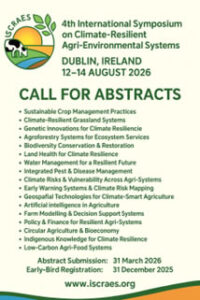
4th International Symposium on Climate-Resilient Agri-Environmental Systems (ISCRAES 2026)
Date: August 12th –14th, 2026
Location: Dublin, Ireland
The main theme of the ISCRAES 2026 is “Land Health Nexus: Cultivating Climate Resilience and Sustainable Agri-Environments”, leading to achieving the primary objective of agro-environmental sustainability by tackling the current major environmental, climate, and societal challenges facing the world.
Important Deadlines:
– Submitting abstracts, Final: 31 March 2026
– Standard registration: 30 April 2026 (For inclusion in the proceedings and programme)
– Late registration fee: 31 July 2026
Read more: www.iscraes.org
International Symposium on Earthworm Ecology (ISEE13)
13th edition
Date: August 23rd-28th, 2026
Location: Wageningen, the Netherlands
This year’s theme, “From the lab to the field, from the field to the lab”, reflects the commitment to bridging the gap between experimental and real-world studies, both of which are essential to the advancement of earthworm research. ISEE13 will offer a dynamic platform for knowledge exchange, with a strong focus on early-career researchers who are at the forefront of addressing global challenges impacting or affected by earthworms.
Important deadline:
Decision on abstract acceptance: March 4th, 2026
Deadline for early bird registration: April 15th, 2026
Deadline for registration: June 17th, 2026
Read more: 13th International Symposium on Earthworm Ecology – Home
First Celebration of the International Day of Caves and Karst (IDCK), proclaimed by UNESCO
Date: September 10th – 13th, 2026
Location: Postojna, Slovenia
Following the proclamation of the International Day of Caves and Karst (IDCK) by UNESCO, this is the first official celebration.
The central date of the celebration will be 13 September 2026, with a series of scientific and outreach events planned in the days leading up to it.
Preliminary programme outline (subject to confirmation):
– September 10th – 12th, 2026: International conference in Postojna Theme: Sustainable management of caves and karst, with a focus on protection, education and research as a foundation for sustainable development, and scientific excursion to selected karst and cave sites.
– September 12th, 2026 (Saturday evening): Official IDCK celebration event in Postojna Cave (to be confirmed).
– September 13th, 2026: International Day of Caves and Karst.
Details regarding the conference programme, invited speakers, co-organisers and registration will be announced in due course.
We warmly invite all supporters of the International Day of Caves and Karst initiative, as well as the wider scientific, educational and policy communities, to save the date. A formal announcement, registration form and detailed programme will follow.
For the Organizers: Nadja Zupan Hajna
Read more:
Further information will be available on the websites:
https://uis-speleo.org/;
https://www.caveskarstday.org/;
https://izrkp.zrc-sazu.si/en
10th International Nitrogen Conference (N2026)
Sustainable Nitrogen Management for Future Generations
Date: November 2nd-6th, 2026
Location: Wageningen, the Netherlands
The 10th International Nitrogen Conference (N2026) aims to foster global collaboration under the theme “Sustainable Nitrogen Management for Future Generations.” While coordination between science and policy is essential, effectively addressing the nitrogen challenge requires the active engagement of all stakeholders, including governments, researchers, educators, industry, civil society, and the public.
Read more: https://www.initrogen.org/events/n2026—kyoto—2—6-november-2026
Opportunities
Agricultural Chemistry Winter School “Soil-Plant-Microbiome functionality and adaptation to anthropogenic stress and climate change”- ACWS2026 –
Date: February 2nd –5th, 2026
Location: DAMSlab Auditorium, Piazzetta Pasolini 5b, Bologna, Italy
The Winter School, organized by the Italian Society of Agricultural Chemistry (SICA) and the Department of Agricultural and Food Sciences at Alma Mater Studiorum—University of Bologna, is offered to doctoral students, postdoctoral researchers, and early-stage researchers.
The interconnected challenges of climate change, anthropogenic activities, and the need to sustain a growing global population are increasingly compelling the need for a comprehensive approach to the soil-plant-microbiome system, necessitating consideration from both agronomic and environmental standpoints. Notably, extreme rainfall events, which are characterized by the occurrence of landslides and flooding, are becoming increasingly prevalent. These events are interspersed with prolonged drought periods, which complicate and economically burden the process of harvesting crops. Consequently, it is imperative to prioritize the enhancement of soil resilience and resistance and the protection of the ecological value of the soil-plant system.
In this regard, the field of agricultural chemistry plays a pivotal role by facilitating the identification of management strategies for the soil-plant-microbiome system.
These strategies are to be aligned with prevailing policies that are oriented towards environmental sustainability and the promotion of a circular economy. The utilization of organic-based fertilizers, biostimulants, nanofertilizers, growth-promoting microorganisms, and biodegradable bioplastic as alternatives to conventional plastics constitutes a series of winning strategies that have the potential to maintain or enhance soil fertility and quality, as well as promote plant growth and enhance their nutritional value.
School Organizer: martina.mazzon2@unibo.it
School Administration: valeria.taraborell3@unibo.it
Read more: https://site.unibo.it/acws-2026/en/the-school
New Books
13th International Conference: Soils of Urban, Industrial, Traffic, Mining and Military areas (SUITMA) from a One Health Perspective (Pisa, 5-9 October 2025) – Book of Abstracts –

By Bretzel F. and Pezzarossa B. and Vannucchi F., eds., CNR Edition, Rome, Italy; 2025.
Soil is a key component of the water and nutrient cycle, and a major contributor to global carbon sequestration. Soil also provides habitats for nearly all land plants, as well as a large proportion of terrestrial fauna. Despite its global importance, it is estimated that one third of global soil is degraded. In anthropized areas, soils undergo many forms of disturbance: manipulation, compaction, and pollution which impact their quality. However, even degraded soils have the potential to alleviate environmental problems and play a vital role in supporting vegetation. Degraded soils of urban areas and other anthropogenic lands merit scientific and professional attention in order to enhance their ecosystem services and to support nature- based solutions, to tackle the urgent challenges of climate change, and for the health of all organisms and ecosystems.
ISBN: 978 88 8080 723 0
DOI: https://doi.org/10.61008/SUITMA-2025
Read more: http://eprints.bice.rm.cnr.it/23775/
Working towards land degradation neutrality in Tanzania
Championing sustainable beekeeping and honey production through the Sustainable Landscapes Production Framework
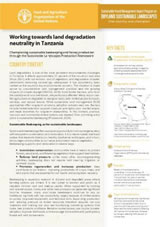
By FAO, Rome, Italy, 2025
The Impact Program works across three eco-regions within drylands, namely: the Miombo-Mopane landscapes of Southern Africa, the Savannas of East and West Africa, and the Great steppes of Central Asia. The 11 countries involved will be working towards the achievement of land degradation neutrality through gender responsive sustainable forest and land management best practices and green value chains.To address regional common management challenges, each country within the Impact Program will champion one specific core theme representing an evidence-based land management system selected to address drivers of land degradation and improve livelihoods. Indeed, each core theme is paired with a green value chain or income generating opportunity. Through the approach, each country will identify good practices to be upscaled and amplified from pocket intervention to wider landscapes. Traveling beyond national borders, across the region and spilling over into the wider geographical scope of the Impact Program, drylands overall will turn into a knowledge pool of best practices with resilient, productive and integrated landscapes.This factsheet is showcasing the work the DSL-IP Tanzania country project is doing for more resilient and productive dryland landscapes and livelihoods.
Read more: https://openknowledge.fao.org/handle/20.500.14283/cd7864en
ZnO-loaded PVC microplastics increases soil Zn bioavailability and phytotoxicity
By: Li G., Cooledge E. C., Chadwick D. R., Jones D. L. – Ecotoxicology and Environmental Safety – Volume 309, 1 January 2026, 119629 Elsevier.
Agricultural plastic film mulches are major sources of macro- and microplastic pollution in agroecosystems. While metal additives such as zinc oxide nanoparticles (ZnO NPs) are commonly incorporated into plastics as ultraviolet (UV) protectants, their environmental fate and impacts following plastic disposal remain poorly understood. This study investigated how ZnO additives in polyvinyl chloride (PVC) films affects soil-plant-microbe interactions, with UV aging used to simulate environmental weathering. Macro- or microplastic PVC film fragments containing 0, 1, or 5% (w/w) ZnO were subjected to UV ageing before incorporation into mesocosms growing maize, with their impacts on maize productivity and soil microbial communities evaluated over a 9-week period. Soil bioavailable Zn reflected the ZnO loading of the PVC films, with microplastics releasing more Zn than macroplastics, and UV aging further increasing Zn mobilization. Zinc bioaccumulation followed the order roots >stems ≈ leaves, and root biomass was reduced by 4050% in the 5% ZnO-PVC treatment, relative to the control. Overall, we observed few effects of PVC or ZnO addition on key microbial diversity indices. In some treatments, higher ZnO concentrations reduced the abundance of key nutrient-cycling bacterial families (e.g., Nitrosomonadaceae and Xanthobacteraceae). Notably, 1% ZnO PVC films showed minimal adverse effects on the microbial community, suggesting they could potentially serve as a slow-release Zn fertilizer. Our study demonstrates that UV-enhanced weathering of ZnO-containing agricultural plastics enhances bioavailable Zn in soil, particularly at high loading rates (5% ZnO). Furthermore, the presence of high concentrations of ZnO in PVC films negatively affected plant development and soil microbial community composition. These findings highlight the need to re-evaluate the use of metal-based additives in agricultural plastics given their potential to impair soil and plant health at high concentrations.
DOI: https://doi.org/10.1016/j.ecoenv.2025.119629
Microplastic impacts on soil and sediment bioturbation: insights from microcosm experiments across diverse ecosystems
By Wazne M., Gilbert F., Vallier M., Lise C., Bailly S., Krause S., Simon L., Capowiez Y., Mermillod-Blondin F., Larue C.
Communication
To IUSS Commission and Working Group Chairs: you are kindly requested to inform the Secretariat whenever there is a change within your Commission and/or Working Group officers. In this way, it will be possible to keep the IUSS Officers Mailing List regularly updated.
To IUSS Full Members: please do not forget to let the Secretariat know about your new President, Secretary, Contact Person. This will be vital in keeping the mailing list updated, so you will not miss out any communication.
Please provide the new name, surname, position and e-mail address to: iuss.secretariat@crea.gov.it
If you are interested in promoting your product or book, event, job call in our Alert, please send an email to iuss.secretariat@crea.gov.it.
You must be logged in to post a comment.