

State of the art
The IUSS Divisions, Commissions and Working Groups Chairs can now share their publications on the IUSS Alert. Every month, send your publications to the Secretariat and they will be published here. Please do so by the 15 of every month to make sure your articles are published in the monthly current issue. Let’s keep our community posted on the progress of Soil Sciences.
Highlighted IUSS publications
By Division 4
Spectroscopy-based models outperform pedotransfer functions for estimating soil hydraulic properties
by Yasas Gamagedara, Gary Feng, Travis Waiser, Michael Williams, Mary Love Tagert, Vitor S. Martins, Nuwan K. Wijewardane
This study demonstrates that visible and near infrared and mid-infrared spectroscopy can estimate soil hydraulic properties more accurately than the widely used Rosetta 3 pedotransfer function. Using soils from contrasting agroecosystems in Texas and Mississippi, the authors developed robust models for predicting Mualem-van Genuchten hydraulic parameters, field capacity, and permanent wilting point, which are traditionally difficult, labor-intensive, and time-consuming to measure. The findings highlight spectroscopy as a rapid and cost-effective approach for soil hydraulic characterization, supporting improved water management, precision agriculture, and sustainable land-use decisions. This work represents an important advance toward large-scale assessment of soil hydraulic functioning.
Read more: https://doi.org/10.1016/j.catena.2026.110099
Soil macropore characteristics and hydro-physical properties improved by diversified crop rotations and cover cropping in long-term no-till cropping systems
Sainfort Vital, Sutie Xu, Xi Zhang, Namrata Ghimire, Peter Sexton, Mengistu Geza, Christopher Graham, Lan Xu g
This study shows that the benefits of no till agriculture can be substantially enhanced through supplementary management practices, particularly cover cropping and, to a lesser extent, diversified crop rotations. By integrating X-ray computed tomography with hydro-physical measurements to a depth of 40 cm, the research provides clear evidence that cover cropping improves macropore architecture, saturated hydraulic conductivity, and soil organic carbon. These properties are fundamental to the capacity of soils to store and transmit water. By enhancing the soil characteristics that regulate water infiltration, movement, and retention, these results have significant practical implications for environments where capturing episodic water inputs is critical for mitigating seasonal drought. This work contributes to a deeper understanding of how integrated management strategies can foster more functional and resilient soils within long-term no-till systems.
Read more: https://doi.org/10.1016/j.still.2026.107124
Diversification, age, and organic amendments affect microbial and enzymatic activities in soils of Arabica coffee plantations in the tropical lowlands of Colombia
by William Andrés Cardona, Joana Falcao Salles, Luis Gabriel Bautista Montealegre, Barbara Prack Mc Cormick, Carlos Mario González Baena, Yeinny Carolina Pisco Ortiz, Eric Scopel, Martha Marina Bolaños Benavides, Miguel Andrés Arango Argoti, Pablo Tittonell
Coffee cultivation is essential for tropical agriculture and rural livelihoods in Latin America, Africa, and Asia. However, coffee production in tropical low-altitude regions characterized by acidic soils and elevated temperatures faces significant challenges, and the soil microbiological dynamics under these environments remain poorly understood. This study assessed the impact of agricultural practices and edaphoclimatic variables on soil biological indicators, such as enzymatic activities and basal respiration in coffee fields located below 1000 m altitude in Colombia.
Read more: https://doi.org/10.1016/j.geodrs.2025.e00966
Assessment of Knowledge Gaps Related to Soil Literacy
by Roger Roca Vallejo, Anna Krzywoszynska, Loukas Katikas, Karen Naciph Mora, Marie Husseini, Sónia Morais Rodrigues, Roos van de Logt, Karen Johnson, Borut Vrščaj, Camilla Ramezzano, Katja Črnec and Almut Ballstaedt
This article assesses the main knowledge gaps associated with soil literacy, understood as people’s ability to understand, value, and act to protect soil resources. The authors identify needs in research, education, public communication, and social participation to improve the relationship between society and soil. The study emphasizes that it is not enough to produce scientific knowledge; this knowledge must be translated into useful learning for communities, educators, decision-makers, and citizens. It also highlights the importance of participatory and transformative approaches that connect soil to everyday problems such as food security, climate change, biodiversity, and sustainability.
Read more: https://doi.org/10.3390/land14071372
News from the IUSS
Decade of Soil Sciences for Sustainable Development 2025-2034 – Healthy Soils for Humanity
The new decade of soil sciences for sustainable development has begun, read the manifesto and download the logo here: https://www.iuss.org/decade-of-soil-sciences-for-sustainable-development/
The Decade aims to prioritize production, dissemination, and use of actionable scientific knowledge across all areas of soil sciences to support the achievement of the Sustainable Development Goals (SDGs).
Divisions, Commissions, and Working Groups are encouraged to coordinate with the IUSS Research Forum in planning activities aligned with the themes of the Decade. These may include special issues, books, position papers, policy briefs, webinars, conferences, workshops, sessions at the World Congress of Soil Science (WCSS), and other relevant initiatives.
Mitigating the impact of land use and its change through conservation management
Call for Papers
Submission deadline: August 1st, 2026
Special issue as IUSS (International Union of Soil Sciences) Commission 4.3 – Soils and Land Use Change with Dr. Gary Feng.
We welcome original papers and reviews that might be presented at the 23rd World Congress of Soil Science held in Nanjing, China, on June 7-12, 2026.
Soils are vital for supporting agriculture, mitigating environmental quality, and provision of ecosystem services. Healthy, functioning soils are the keystone to global sustainability of ecosystems and land-based human activities, and for providing healthy environments for humankind.
The selected papers will mainly report the latest achievements in research focused on conservation, restoration and improvement of land use and its change through conservation managements, focused on promoting the sustainability of managed and natural ecosystems.
Keywords: soil health, land use change, soil amendment, cover crops, conservation management, soil functions, soil properties, carbon dynamics
Guest Editors:
Prof. Gary Feng
USDA-ARS
United States
Prof. Felipe A. Zúñiga Ugalde
Universidad Austral de Chile; Instituto de Bosques y Sociedad
Chile
Prof. Ying Ouyang
USDA Forest Service; Southern Research Station
United States
Prof. José Dörner
Universidad Austral de Chile; Instituto de Ingeniería Agraria y Suelos
Chile
Dr. Tingting Chang
Hohai University
China
Prof. Rainer Horn
Institut für Pflanzenernährung und Bodenkunde; Christian-Albrecht-Universität zu Kiel
Germany
Dr. Ingrid Martínez
Instituto de Investigaciones Agropecuarias (INIA-Chile)
Chile
Read more: https://bsssjournals.onlinelibrary.wiley.com/hub/14752743/call-for-papers/si-2025-001332
IUSS Joint Commission 1.7/3.8 “Permafrost-Affected Soils
Call for papers, Submission Deadline: Tuesday, September 1st, 2026
We would like to draw your attention to a Special Issue, “Applied Pedology: Practical Solutions Across a Variety of Disciplines and Issues” in Soil Use and Management. The special Issue is framed within the IUSS initiatives of the Research Forum for the 2025-2034 Decade of Soil Sciences for Sustainable Development (DSSSD) (www.iuss.org/decade-of-soil-sciences-for-sustainable-development/). We’d like to extend an invitation for contributions to the special issue before the 1st September 2026 deadline.
For more information on the scope of the special issue, please refer to the Call for Papers (contributions accepted include, original research papers, reviews, reports of case studies and practical experience, opinions, and perspectives).
Manuscript can be submitted to the SUM submission system. Please follow the Author Guidelines and select the special issue title when asked: “Is this submission for a special issue?”.
We would be enormously grateful if you could let us know your decision via this form.
For more information: Prof. Adrian Unc, aunc@mun.ca Vice-Chair
Alan Wild Reviews, Perspectives and Topical Collections Editor, Soil Use and Management (British Soil Science Society)
Soil Mission Manifesto
The Mission Soil Manifesto (https://mission-soil-platform.ec.europa.eu/community/mission-soil-manifesto) calls for action to respond to the urgent need to protect and improve soil health in Europe and beyond and bring together regional and local policymakers, stakeholders and citizens into a vibrant community that cares for soil health. It was launched by the EU Mission Soil on April 18, 2023, and it has been signed by the IUSS President, Prof. Victor O. Chude.
EUROSOIL 2028

Date: September 4th – 7th, 2028
Location: Edinburgh, Scotland, UK
The Eurosoil 2028 Organising Committee (Download) is pleased to connect with representatives of national soil science societies to invite your involvements as we progress with the conference planning.
Eurosoil 2028, is hosted by the British Society of Soil Science (BSSS) in collaboration with the European Confederation of Soil Science Societies (ECSSS). Eurosoil 2028 will bring together researchers, practitioners, policymakers, and industry leaders to explore the vital role of soil in addressing global challenges.
Eurosoil 2028 will be held in the vibrant and historic city of Edinburgh, at the Edinburgh International Conference Centre (EICC). The main theme of the congress will be ‘Soil at the heart of society’, through which we will celebrate the diversity and importance of soils across Europe and beyond.
Read more: https://eurosoil2028.com/
PEDOMETRICS 2026
Date: September 15th –18th, 2026
Location: Seres Springs Resort & Spa Singakerta, Ubud, Bali, Indonesia
The IUSS Commission of Pedometrics is happy to announce the Pedometrics conference 2026.
PEDOMETRICS 2026 will convene global experts in soil data analytics, geostatistics, machine learning, and environmental modeling to share insights, foster collaboration, and inspire new approaches to understanding and managing soils in the face of climate change and its growing environmental challenges.
PEDOMETRICS 2026 will feature:
International conference sessions on pedometrics and climate change research
Pre-conference training workshops
Field trip: “From Ground to Grid: Digitalizing Soil Landscape of Bali”
We encourage contributions from researchers, practitioners, students, and professionals working across soil science, spatial modelling, environmental data science, digital soil mapping, climate change, and related fields.
Key Dates:
July 1st –30th, 2026: Participant registration
Read more: https://pedometrics2026.org/
Northern lands at a crossroads: Agriculture and climate sustainability
Call for Papers
Submission deadline: 31 January 2027
The papers will be published for the journal Soil Use and Management.
This special issue will report on the most recent studies conducted at northern latitudes and in circumpolar regions that examine how agricultural land conversion, extended growing seasons, and the northward migration of crops driven by climate warming affect soil, biodiversity, and climate. This special issue welcomes empirical studies, reviews and perspectives with regional relevance on the following topics related to northern agriculture: biodiversity, soil health indicators (physical, chemical and biological), greenhouse gas emissions, permafrost thaw, carbon sequestration, plant-soil interactions, and indigenous knowledge and local knowledge.
Keywords: Carbon sequestration; Greenhouse gas emissions; Indigenous ecological knowledge; Land conversion; Organic amendments; Soil degradation; Soil function; Soil health; Soil restoration
Guest Editors:
Prof. Maren Oelbermann
University of Waterloo
Canada
Prof. Melissa Ward Jones
University of Alaska, Fairbanks
United States
Dr. Elsa Maria Arrazola Vasquez
Swedish University of Agricultural Sciences (SLU)
Sweden
Dr. Kayla Wakulich
Wilfrid Laurier University
Canada
Prof. Debasmita Misra
University of Alaska
Fairbanks
United State
Prof. Pengfei Li
Xian University of Science and Technology
China
Dr. Stéphanie Grand
University of Lausanne
Switzerland
Read more: Soil Use and Management Call for Papers Northern lands at a crossroads: Agriculture and climate sustainability
News from national and regional soil science societies 2026
Italian Society of Soil Science (SISS)
Roots of the Future – Soil and Plants in Global Change: Technologies, Degradation, Sustainability ROF2026
Date: September 8 th–11th, 2026
Location: DAMSLab Auditorium Piazzetta Pasolini 5b, Bologna, Italy
ROF2026 is the joint congress of the Italian Society of Agricultural Chemistry (SICA), the Italian Society of Soil Science (SISS), and the Italian Society of Pedology (SIPe) place the soil-plant system at the center of scientific, technological, and social debate. The goal is to explore multidisciplinary approaches and innovative tools to ensure the resilience, functionality, and sustainability of agroforestry ecosystems in the future that awaits us.
Read more: ROOTS OF THE FUTURE – SOIL AND PLANTS IN GLOBAL CHANGE: TECHNOLOGIES, DEGRADATION, SUSTAINABILITY
Soil Science Australia
2026 Soil Science Australia National Conference
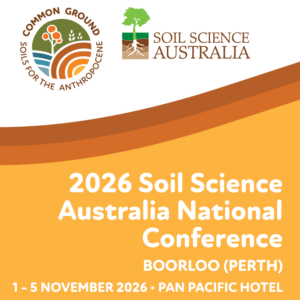
Date: November 1st – 5th, 2026
Location: Boorloo, Perth, Australia
The conference will serve as a platform for a diversity of voices across science, policy, industry and community to explore our understanding of soils as the foundation of productivity, security, community and resilience.
Read more: https://conference.soilscienceaustralia.org.au/
Soil Science Society of America (SSSA)
CANVAS 2026
Data: November 1st – 4th, 2026
Location: Portland, Oregon
The nexus of earth & science Four Days of Science, Community, and Discovery.
CANVAS 2026, the annual meeting of the American Society of Agronomy (ASA), the Crop Science Society of America (CSSA), and the Soil Science Society of America (SSSA).
With more than 4,000 scientists expected, it is the single largest gathering at the nexus of agronomy, crop science, soil science, and environmental science, and a valuable professional opportunity you can make plans to attend this year.
Oral and poster abstract submissions are open through June 9th (early submission rate) or June 23rd (final submission): www.sciencesocieties.org/canvas/submit. Edits are accepted through Nov. 4th. Registration opens May 1st, 2026.
Participants will be:
Professionals & Practitioners, Researchers & Academics, · Students & Early-Career Scientists
Read more: www.sciencesocieties.org/canvas
Nepalese Soil Science Society- NSSS
Data: March 1st – 3 rd, 2027
Location: Forestry University, Chiwan
The Nepalese Soil Science Society- NSSS will host next 17th ESAFS (The East and Southeast Asia Federation of Soil Science Societies) at Agriculture.
Post-congress excursion: March 4-6, 2027
Read more: https://www.esafs-support.com/
Conferences, Meetings and Workshops 2026
Workshop on Innovation in Sustainable Agriculture & Food Production
Date: July 8th – 10th, 2026
Location: Minoa Palace Resort, Cahnia, Crete, Greece
Civilisation faces a huge challenge in feeding a world population estimated to reach 10 billion by 2050 a healthy diet while avoiding excessive consumption of natural resources and damage to the environment. Innovative approaches are required to agriculture and food production technology that increase yields and decrease waste, while minimising harm to the ecosystem. Recent world problems have demonstrated the importance of resilience throughout the ‘Farm to Fork’ food chain. The Sustainable Agriculture and Food Production workshop will address challenges in this area.
The workshop will be held as part of the KES International Sustainability in Energy and Buildings (SEB-26) and Sustainable Design and Manufacturing (SDM-26) conferences.
Read more: http://seb-26.kesinternational.org/workshop.php
12th Scientific Committee on Antarctic Research (SCAR) Open Science Conference & Meetings

Date: August 8th –19th, 2026
Location: Oslo, Norway
The SCAR and the Norwegian Polar Institute warmly invite you to the 12th SCAR Open Science Conference, the conference will feature an interdisciplinary programme that includes plenary lectures, parallel sessions, mini-symposia, workshops, panel discussions, posters, and social activities.
Join colleagues from around the world for a rich and varied programme, from plenary lectures and mini-symposia to parallel sessions, panels, posters, and an inspiring social programme in and around Oslo.
Read more: https://scar2026.org/
4th International Symposium on Climate-Resilient Agri-Environmental Systems (ISCRAES 2026)
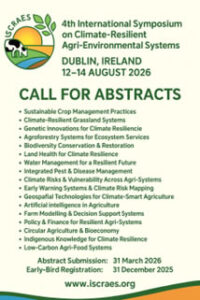
Date: August 12th –14th, 2026
Location: Dublin, Ireland
The main theme of the ISCRAES 2026 is “Land Health Nexus: Cultivating Climate Resilience and Sustainable Agri-Environments”, leading to achieving the primary objective of agro-environmental sustainability by tackling the current major environmental, climate, and societal challenges facing the world.
Deadlines:
– Late registration fee: 31 July 2026
Read more: www.iscraes.org
International Symposium on Earthworm Ecology (ISEE13)
13th edition
Date: August 23rd-28th, 2026
Location: Wageningen, the Netherlands
This year’s theme, “From the lab to the field, from the field to the lab”, reflects the commitment to bridging the gap between experimental and real-world studies, both of which are essential to the advancement of earthworm research. ISEE13 will offer a dynamic platform for knowledge exchange, with a strong focus on early-career researchers who are at the forefront of addressing global challenges impacting or affected by earthworms.
Read more: 13th International Symposium on Earthworm Ecology – Home
First Celebration of the International Day of Caves and Karst (IDCK), proclaimed by UNESCO
Date: September 10th – 13th, 2026
Location: Postojna, Slovenia
Following the proclamation of the International Day of Caves and Karst (IDCK) by UNESCO, this is the first official celebration.
The central date of the celebration will be 13 September 2026, with a series of scientific and outreach events planned in the days leading up to it.
We warmly invite all supporters of the International Day of Caves and Karst initiative, as well as the wider scientific, educational and policy communities, to save the date. A formal announcement, registration form and detailed programme will follow.
Read more:
https://uis-speleo.org/;
https://www.caveskarstday.org/;
https://izrkp.zrc-sazu.si/en
5th International Soil Modeling Consortium Conference (ISMC 2026) “Advances and Challenges in Tropical Soil Modeling”
Date: September 15th – 19th, 2026
Location: Rio di Janeiro, Pontifical Catholic University of Rio de Janeiro (PUC-Rio), Brazil
The conference is organized by the University of São Paulo (USP), the Geological Service of Brazil (SGB), and PUC-RioThe official language of the conference is English.
ISMC 2026 will be the first ISMC conference held in Latin America and will focus on tropical soil modelling, emphasizing its importance for food and water security, carbon cycling, biodiversity, and land-use change.
Conference topics:
– Databases in PTF development to support soil modelling
– Soil structure and properties: Measurement, spatial and temporal variability, and uncertainty assessment
– Critical zone monitoring and modelling
– Modelling processes in highly weathered tropical soils
– Taking advantage of remote sensing and big data in soil modelling
– Modelling aspects of soil health
– General Session for model-related research
Important dates:
Notification oral/poster: August 15th, 2026
Read more: https://ismc2026.com.br/default.aspx
World Food Forum 2026 (2026WFF)
Date: October 08th -16th, 2026
Location: headquarters FAO, Rome, Italy, and online
The World Food Forum (WFF) flagship event is a global platform that drives action to transform agrifood systems through the power of youth, science and innovation, and investment. Bringing together all stakeholders, it serves as a dynamic space for turning ideas into actions, scaling solutions and forging synergistic partnerships. By uniting diverse voices and fostering cross-sectoral and intergenerational collaboration, it accelerates progress toward the Sustainable Development Goals, driving action at global, regional and local levels.
Organized around three pillars, Global Youth Action, Science and Innovation Forum, and the Hand-in-Hand Initiative Investment Forum, serves as a vibrant platform for bold ideas and inclusive partnerships. The programme spans high-level dialogues, consultations, innovation labs, interactive pitching events, hackathons, matchmaking meetings, exhibitions and cultural showcases that spotlight the many ways people everywhere are shaping a better food future.
Read more: https://www.world-food-forum.org/
10th International Nitrogen Conference (N2026)
Sustainable Nitrogen Management for Future Generations
Date: November 2nd-6th, 2026
Location: Wageningen, the Netherlands
The 10th International Nitrogen Conference (N2026) aims to foster global collaboration under the theme “Sustainable Nitrogen Management for Future Generations.” While coordination between science and policy is essential, effectively addressing the nitrogen challenge requires the active engagement of all stakeholders, including governments, researchers, educators, industry, civil society, and the public.
Read more: https://www.initrogen.org/events/n2026—kyoto—2—6-november-2026
Soil Gases in Environmental and Geological Processes
International Conference
Date: November 6th, 2026
Venue: 45 Budaörsi Road, HUN-REN Research Centre for Astronomy and Earth Sciences, H-1112 Budapest, Hungary
The international conference, focusing on the role and significance of soil gases in environmental and geological systems, aims to bring together researchers, professionals, and
students working in the following fields: · H₂ and natural analogues, · CCS monitoring systems, · Radon in soil gases, · Agricultural aspects of soil gases, · Microbiological processes related to soil gases, · Soil gas studies associated with the carbon cycle, · Nitrogen and sulphur in soil gases, · Anthropogenic gases in soil
We welcome both oral and PICO presentations.
Abstract submission and early registration deadline: September 30th, 2026
Read more: https://hungarian-geography.hu/co2soil/conference
New Books
Developing technology to increase yields while curbing methane emissions
Composition by Yumi Ohuchi
Illustration by Rokuhisa Chino
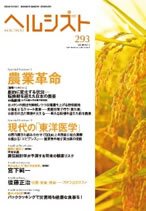
While carbon dioxide accounts for 75% of the greenhouse gases considered the root cause of global warming, the global warming potential of methane is actually around 25 times higher than that of carbon dioxide. Wetlands and cattle burps are known sources of the gas, but approximately 10% of global methane emissions and around 40% of those in Japan stem from rice paddies. Countries throughout Asia engage in wet-rice farming, and given that their populations are increasing, we cannot ignore methane emissions from rice paddies. There is no time to lose in developing technology that increases yields while curbing methane emissions, in order to achieve sustainable rice production.
Read more: https://healthist.net/en/food/2531/
The Impact of Disasters on Agriculture and Food Security 2025 – Digital solutions for reducing risks and impacts
By FAO, 2025, Rome, Italy
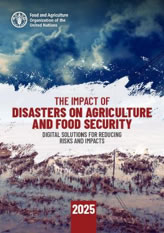
This biennial flagship report provides comprehensive evidence on the escalating impact of disasters on global agricultural systems, revealing losses of USD 3.26 trillion over the period 1991–2023. The 2025 edition introduces enhanced methodologies for assessing disaster impacts across crops, livestock, fisheries and aquaculture subsectors, offering Member States robust data for evidence-based policymaking.Aligned with the 2030 Agenda for Sustainable Development and the Sendai Framework for Disaster Risk Reduction, this edition provides actionable recommendations for integrating disaster risk reduction into agricultural policies and investments through digital innovations. From AI-powered early warning systems to mobile-based insurance reaching millions of smallholder farmers, the report demonstrates how technology is revolutionizing agricultural risk management. Yet technology alone isn’t the answer. The report emphasizes putting farmers at the centre – designing solutions with them, not for them – while addressing the digital divide that leaves 2.6 billion people offline. Through compelling case studies and actionable frameworks, it provides a roadmap for building resilient agricultural systems capable of feeding the world in an era of mounting climate risks. This publication serves as an essential resource for governments, development partners, and stakeholders working to build resilient agrifood systems in the face of climate change and increasing disaster risks.
DOI: https://doi.org/10.4060/cd7185en
ISBN: 978-92-5-140180-4
Opportunities
FAO elearning Academy Global Youth Contest: From learning to impact

A global call for young learners and professionals to share how the FAO elearning Academy supports studies, careers and practice. Three winners will be selected and awarded a fully funded trip to Rome to attend the World Food Forum 2026 (12-15 Oct 2026).
18-35 eligible age range
Applications are open until 31 July 2026 (23.59 CEST).
Read more: https://elearning.fao.org/youth-contest
Multilateral dialogue on principles and values in research & innovation cooperation
The European Commission is joining forces with the ISC to expand its multilateral dialogue on research and innovation collaboration to the global level. Between 2026 and 2029, the project will gather regional perspectives through a series of high-level workshops and consultations in Latin America, Africa, Asia, and online. Discussions will culminate in a global ministerial meeting, which will aim to adopt a declaration for international scientific and innovation collaboration and a set of practical tools and frameworks.
ISC Members, Fellows and partners will be invited to provide input as part of the consultative process: https://council.science/news/multilateral-dialogue-launch/
Opportunities from the ISC community
Call for nominations: Fellowship candidates for the Australian Academy of Science. Deadline: July 31st, 2026.
Call for nominations: Stock Water Prize, awarded to an individual, institution or organization that has made substantial contribution to our understanding, use and protection of water resources. Deadline: September 15th , 2026.
ECHO Soil Challenge – Soil Stories
The ECHO Soil Challenge – Soil Stories aims to raise awareness among students, teachers, educators and citizens about the value of soil as a vital resource for ecosystems, food security and climate. It promotes creativity, scientific experimentation, and science communication, while also contributing to the dissemination of the ECHO SoiLab for Teens as an educational tool for hands-on school activities.
Participation in the ECHO Soil Challenge – Soil Stories contest is open to applicants based in the following eligible countries: Italy, Poland, Spain, Scotland, Greece, Romania, Germany, Portugal, Finland.
The contest has four categories:
• Category 1: children aged 6–10 (primary school)
• Category 2: children aged 11–13 (lower secondary school)
• Category 3: young people aged 14–19 (upper secondary school)
• Category 4: ECHO Soil Ambassador
For each category, 3 winners will be selected.
For Categories 1-3, submissions must be presented by teachers, professors, or educators on behalf of children or young people aged 6–19. Projects may be developed by classes or groups, under the guidance of the submitting teacher or educator. The teacher or educator acts as the official applicant and contact person, and is responsible for submitting the project, communicating with the ECHO team, and ensuring compliance with the contest rules.
Category 4 is open to people who are involved in the ECHO project as ECHO Soil Ambassador.
Timeline
• Submission deadline: November 9th, 2026
• Announcement of winners: December 16th, 2026
• Final webinar with winners: January 15th, 2027
Read more: https://echosoil.eu/echo-soil-challenge-soilstories
Communications
To IUSS Commission and Working Group Chairs: you are kindly requested to inform the Secretariat whenever there is a change within your Commission and/or Working Group officers. In this way, it will be possible to keep the IUSS Officers Mailing List regularly updated.
To IUSS Full Members: please do not forget to let the Secretariat know about your new President, Secretary, Contact Person. This will be vital in keeping the mailing list updated, so you will not miss out any communication.
Please provide the new name, surname, position and e-mail address to: iuss.secretariat@crea.gov.it
If you are interested in promoting your product or book, event, job call in our Alert, please send an email to iuss.secretariat@crea.gov.it.
You must be logged in to post a comment.