

State of the art
The IUSS Divisions, Commissions and Working Groups Chairs can now share their publications on the IUSS Alert. Every month, send your publications to the Secretariat and they will be published here. Please do so by the 15 of every month to make sure your articles are published in the monthly current issue. Let’s keep our community posted on the progress of Soil Sciences.
Highlighted IUSS publications
By Division 2
Limited recovery of soil organic matter composition in fen peatlands after rewetting
By Keunbae Kim, Judith Schellekens, Willem-Jan Emsens, Rudy van Diggelen, Camiel Aggenbach, Erik Verbruggen, Yvonne Liczner, Agata Klimkowska, Franziska Tanneberger, Wiktor Kotowski, María Jesús Iglesias Briones, Boris Jansen, Karen Vancampenhout (2026).
About half of Europe’s peatlands have been drained for agriculture, forestry, and peat extraction, with lowland fens disproportionately affected due to their high nutrient availability and productivity post-drainage. Peatland rewetting has gained importance as a strategy to mitigate carbon losses and restore biodiversity; however, its effectiveness in reestablishing below-ground processes remains uncertain. Soil organic matter (SOM) dynamics play a crucial role in peatland restoration outcomes, influencing peat structural integrity and hydrological properties, as well as the availability of substrates and nutrients for microbial and plant communities. In this paper, the Authors present a Europe-wide assessment of the effects of fen drainage and rewetting on SOM molecular composition, analyzing fens with contrasting hydrological status (undrained, drained, and rewetted) across three depths (0 − 5, 15 − 20, and 45 − 50 cm) using pyrolysis–gas chromatography/mass spectrometry. Despite considerable variability induced by site-specific heterogeneity, the molecular composition of undrained fens clearly reflected the dominant contributions of sedges, grasses, and brown mosses to peat formation in fens, with characteristic stratification. Drainage consistently led to a decline in components from plant biopolymers (carbohydrates and lignins) across sites, and an increase in microbially altered compounds (N-compounds, benzenes, and aliphatics), with the most pronounced effects at intermediate depths (15 − 20 cm). Rewetting partially reversed these alterations, with some fens exhibiting a shift in molecular composition reverting toward undrained conditions, particularly in sites rewetted for longer periods. However, significant differences remained between rewetted and undrained fens. The findings suggest that while rewetting over time can facilitate partial recovery of carbon dynamics, the below-ground legacy of drainage-induced alterations can persist, at least for a timescale of several decades.
Read more: https://doi.org/10.1016/j.geoderma.2025.117646
Plastic pathways and intervention strategies in urban water systems
By Paolo F. Tasseron, Tim H.M. van Emmerik, Anna Schwarz, Anna Wilking, Francesca Alberti, Martine van der Ploeg (2026).
Plastic pollution escalated into a global environmental problem, threatening human health, ecosystems, and sustainable development. Despite global, regional, and local mitigation efforts, plastic production is expected to double, exceeding waste management infrastructure growth. Understanding plastic pathways, analyzing impacts, and designing effective interventions in urban water systems necessitate a finer regional or local resolution than currently provided by global and national studies. The Authors have quantified the mass flows of ten most abundant plastic items throughout their life cycle and proposed interventions for the Amsterdam urban water system. They used a dataset of 9968 floating (plastic) items at twenty diverse locations, with the top ten items comprising 80% of the total items (39.3% of the total mass). Despite representing less than 0.01% of plastic use in Amsterdam, end-of-life littering and spills cause disproportionate environmental harm relative to their abundance. Systematic interventions are required in Amsterdam to reduce the annual loss of 16.0 (2.9-34.7) metric tons of plastic into the IJ River. We defined seven interventions to reduce plastic consumption and contribute to a closed-loop plastic system. Successful implementation demands a transition with changes in legislation (regarding production, item design, and waste management), decision-making, and consumer behavior. The Authors prioritize intervention methods according to the waste hierarchy, emphasizing waste prevention over impact mitigation. Decision-support tools including these interventions can guide authorities to achieve (inter)national reduction and circularity goals. Ultimately, the paper aims to provide decision-makers with actionable insights, accelerating the transition to a circular and less polluting plastic economy and sustainable, plastic-free environments.
Read more: DOI: 10.2139/ssrn.5678548
News from the IUSS
Decade of Soil Sciences for Sustainable Development 2025-2034 – Healthy Soils for Humanity
The new decade of soil sciences for sustainable development has begun, read the manifesto and download the logo here: https://www.iuss.org/decade-of-soil-sciences-for-sustainable-development/
The Decade aims to prioritize production, dissemination, and use of actionable scientific knowledge across all areas of soil sciences to support the achievement of the Sustainable Development Goals (SDGs).
Divisions, Commissions, and Working Groups are encouraged to coordinate with the IUSS Research Forum in planning activities aligned with the themes of the Decade. These may include special issues, books, position papers, policy briefs, webinars, conferences, workshops, sessions at the World Congress of Soil Science (WCSS), and other relevant initiatives.
Division and Commission Officers Election – 2026 and members of the Standing Committees Election 2026
The election process is now completed, and the winners will be announced via IUSS Alert within May 31, 2026.
Presidential Election 2026
The Presidential Election Committee has examined the candidacies for the position of the IUSS President Elect, and the outcomes have been endorsed by the Executive Committee. The IUSS Secretariat will reach the IUSS Full Members in the next few days to provide them with the candidates’ official documents and the guidelines for the voting process.
To enquire: iuss.secretariat@crea.gov.it
IUSS Joint Commission 1.7/3.8 “Permafrost-Affected Soils
Call for papers, Submission Deadline: Tuesday, September 1st, 2026
We would like to draw your attention to a Special Issue, “Applied Pedology: Practical Solutions Across a Variety of Disciplines and Issues” in Soil Use and Management. The special Issue is framed within the IUSS initiatives of the Research Forum for the 2025-2034 Decade of Soil Sciences for Sustainable Development (DSSSD) (https://www.iuss.org/decade-of-soil-sciences-for-sustainable-development/). We’d like to extend an invitation for contributions to the special issue before the 1 September 2026 deadline.
For more information on the scope of the special issue, please refer to the Call for Papers (contributions accepted include, original research papers, reviews, reports of case studies and practical experience, opinions, and perspectives).
Manuscript can be submitted the SUM submission system. Please follow the Author Guidelines and select the special issue title when asked: “Is this submission for a special issue?”.
We would be enormously grateful if you could let us know your decision via this form .
For more information: Prof. Adrian Unc, aunc@mun.ca Vice-Chair
Alan Wild Reviews, Perspectives and Topical Collections Editor, Soil Use and Management (British Soil Science Society)
Soil Mission Manifesto
The Mission Soil Manifesto (https://mission-soil-platform.ec.europa.eu/community/mission-soil-manifesto) calls for action to respond to the urgent need to protect and improve soil health in Europe and beyond and bring together regional and local policymakers, stakeholders and citizens into a vibrant community that cares for soil health. It was launched by the EU Mission Soil on April 18, 2023, and it has been signed by the IUSS President, Prof. Victor O. Chude.
Soil Science Society of China (SSSC) and IUSS
The 23rd World Congress of Soil Science (WCSS) – Soil and the Shared Future for Humanity

Date: June 7th -12th, 2026
Location: Nanjing, China
Nanjing Welcomes Global Soil Scientists for the 23rd World Congress of Soil Science
Soil Science Society of China successfully won the bid to host the 23rd World Congress of Soil Science (WCSS) in Brazil’s 21st WCSS. For the first time, China as a host country invites global soil scientists to explore the centennial journey of soil science.
The 23rd WCSS will be held in the International Expo Center from June 7 to 12, 2026 in Nanjing, the capital city of the most developed Jiangsu province, under the theme of “Soil and the Shared Future for Humanity”. 121 sessions in five categories have been accepted.
Deprived from the Chinese character “土” (Soil), the mascot KuiKui manifests the concept of “One World for One Earth”. The emblem on its belly represents the earth, with the inner circle featuring five typical soil colors in China, while the outer circle featuring the blue ocean.

The World Congress of Soil Science is the most authoritative and influential international conference in the field, sponsored by the International Union of Soil Sciences. It is a major event for scientific and technological professionals in soil science and related disciplines worldwide to engage in academic exchange. Held every four years, the conference covers a wide range of topics and serves as a platform for exchange and collaboration among soil scientists from around the globe.
The WCSS2026 theme, ‘Soil and the Shared Future for Mankind’, focuses on the importance of soil for our future, with a variety of arrangements including poster exhibition, young researcher forum and soil judging contest. Tours will also be organized for participants to visit typical soils in combination with unique landscapes and cultural diversification as China is a vast country with rich soil resources.
With a global population that is projected to exceed 9 billion by 2050, our current and future food security hinges on our ability to increase yields and food quality using the soils that we already have available today. We are responsible for the soils that provide us with food, water and air, and we need to take action today to ensure that we have healthy soils for a sustainable and food secure future. Our understanding of the importance is developing rapidly and WCSS2026 provides a platform for us to discover the solutions to soil issues and an opportunity to connect all who work with and have interests in soils.
Read more: Join and follow via the official website: https://www.23wcss.org.cn/
Important dates and deadlines:
Regular registration deadline: May 7, 2026
Cancellation and Refund deadline: May 7, 2026
Post-Congress Tours
Invitation to participate in the exclusive Post-Congress Scientific Tours across China — where soil science meets stunning landscapes and cultural heritage. They are arranged six unique expedition routes covering key soils and regions, from the black soils of Northeast China to the tea gardens of Jiangnan, from the capital’s green city projects to the magnificent Danxia and Karst landforms. Each tour blends field observation, soil profiling, and local culture — guided by experts and designed for deep learning beyond the congress.
Choose your scientific journey:
Tour 1: Scientific Expedition on Red Soil in South China
Tour 2: Jiangnan Tea & Rice Soil Scientific Expedition
Tour 3: Survey on Soil Environment and Green City Construction in the Capital
Tour 4: Soil and Geoscience Expedition in the Loess Plateau & Historical-Cultural Tour
Tour 5: Northeast Thick Black Soil Region Scientific Expedition
Tour 6: Northeast Thin Black Soil Region Scientific Expedition
Explore routes, costs, and details here: https://www.23wcss.org.cn/Post-Congress%20Tours/index.html
IUSS and Soil Science Society of China (SSSC)
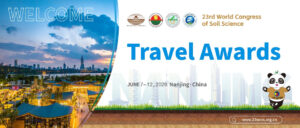
Travel Awards for Attending World Congress of Soil Science 2026
The International Union of Soil Sciences (IUSS) and Soil Science Society of China (SSSC) are pleased to offer travel awards to support early-career scientists who wish to participate in the 23rd World Congress of Soil Science (WCSS2026) from 7-12 June 2026, in Nanjing China. This initiative aims to encourage the participation of promising graduate students and early-career researchers by providing financial assistance to help cover travel and registration expenses.
A total of 40,000 USD in funding is available, aiming for gender and geographic equity. Each selected applicant will be eligible to receive up to a maximum of 1,000 USD. The award will be disbursed as a reimbursement for actual travel costs and/or WCSS2026 registration fees incurred.
Support is only for early-career scientists who are high-quality Master or PhD students or who completed a Master or PhD degree less than 5 years ago.
Applicants must be the presenting author of a submitted oral or poster presentation abstract for WCSS2026 and must be a member of a council society (national soil science society) that is a full member of IUSS.
Applicants need to send their applications to: wcss2026@issas.ac.cn
Contact: wcss2026@issas.ac.cn
The Digital Age in the Study, Evaluation, and Teaching of Soil Science
Special session number 503003 IUSS 23rd World Congress on Soil Science
In the digital transformation era, we invite researchers and professionals to participate with us in this innovative session exploring the convergence between cutting-edge technologies and soil sciences. This pioneering session will address how digital tools revolutionize our understanding, management, and teaching of soil sciences. Participants will be able to observe the largest augmented and mixed reality applications that allow soil profiles to be visualized in real-time, facilitating on-site analysis and improving educational experience in the field. We will explore the development of mobile applications focused on soil resources, as well as the potential presents by the use of artificial intelligence, machine learning, and advanced image analysis systems focused on soil sciences. This session represents a unique opportunity to establish international collaborations between soil scientists, software developers, and technology experts. Attendees will be able to share experiences on the implementation of innovative technological solutions in soil research and discuss the potential of these tools to address global challenges in soil conservation and sustainable management. In this sense, we are seeking contributions that highlight recent technological developments, successful case studies, and innovative proposals that combine soil sciences with these emerging technologies. This session will undoubtedly be a catalyst to inspire the next generations and foster the development of collaborative projects that harness the power of technology to advance our understanding of soils systems. Join this space where scientific tradition converges with digital innovation, creating new possibilities for research, education and soil management.
Contact: fernando.ayala@comunidad.unam.mx; leptosol@ciga.unam.mx
Mitigating the impact of land use and its change through conservation management
Call for Papers
Submission deadline: August 1st, 2026
Special issue as IUSS (International Union of Soil Sciences) Commission 4.3 – Soils and Land Use Change with Dr. Gary Feng.
We welcome original papers and reviews that might be presented at the 23rd World Congress of Soil Science held in Nanjing, China, on June 7-12, 2026.
Soils are vital for supporting agriculture, mitigating environmental quality, and provision of ecosystem services. Healthy, functioning soils are the keystone to global sustainability of ecosystems and land-based human activities, and for providing healthy environments for humankind.
The selected papers will mainly report the latest achievements in research focused on conservation, restoration and improvement of land use and its change through conservation managements, focused on promoting the sustainability of managed and natural ecosystems.
Keywords: soil health, land use change, soil amendment, cover crops, conservation management, soil functions, soil properties, carbon dynamics
Guest Editors:
Prof. Gary Feng
USDA-ARS
United States
Prof. Felipe A. Zúñiga Ugalde
Universidad Austral de Chile; Instituto de Bosques y Sociedad
Chile
Prof. Ying Ouyang
USDA Forest Service; Southern Research Station
United States
Prof. José Dörner
Universidad Austral de Chile; Instituto de Ingeniería Agraria y Suelos
Chile
Dr. Tingting Chang
Hohai University
China
Prof. Rainer Horn
Institut für Pflanzenernährung und Bodenkunde; Christian-Albrecht-Universität zu Kiel
Germany
Dr. Ingrid Martínez
Instituto de Investigaciones Agropecuarias (INIA-Chile)
Chile
Read more: https://bsssjournals.onlinelibrary.wiley.com/hub/14752743/call-for-papers/si-2025-001332
Northern lands at a crossroads: Agriculture and climate sustainability
Call for Papers
Submission deadline: 31 January 2027
The papers will be published for the journal Soil Use and Management.
This special issue will report on the most recent studies conducted at northern latitudes and in circumpolar regions that examine how agricultural land conversion, extended growing seasons, and the northward migration of crops driven by climate warming affect soil, biodiversity, and climate. This special issue welcomes empirical studies, reviews and perspectives with regional relevance on the following topics related to northern agriculture: biodiversity, soil health indicators (physical, chemical and biological), greenhouse gas emissions, permafrost thaw, carbon sequestration, plant-soil interactions, and indigenous knowledge and local knowledge.
Keywords: Carbon sequestration; Greenhouse gas emissions; Indigenous ecological knowledge; Land conversion; Organic amendments; Soil degradation; Soil function; Soil health; Soil restoration
Guest Editors:
Prof. Maren Oelbermann
Univesity of Waterloo
Canada
Prof. Melissa Ward Jones
University of Alaska, Fairbanks
United States
Dr. Elsa Maria Arrazola Vasquez
Swedish University of Agricultural Sciences (SLU)
Sweden
Dr. Kayla Wakulich
Wilfrid Laurier University
Canada
Prof. Debasmita Misra
University of Alaska
Fairbanks
United State
Prof. Pengfei Li
Xian University of Science and Technology
China
Dr. Stéphanie Grand
University of Lausanne
Switzerland
Read more: Soil Use and Management Call for Papers Northern lands at a crossroads: Agriculture and climate sustainability
News from national and regional soil science societies 2026
Soil Science Society of Pakistan (SSSP)
The 21st International Congress of Soil Science (ICSS-2026) – Soil Resilience for Sustainable Development
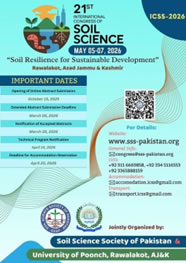
Date: May 5th – 7th, 2026
Location: University of Poonch Rawalakot (UPR) in Azad Jammu & Kashmir, Pakistan
The theme of Congress is: “Soil Resilience for Sustainable Development”
Read more: www.sss-pakistan.org
info@sss-pakistan.org
Italian Society of Soil Science (SISS)
Roots of the Future – Soil and Plants in Global Change: Technologies, Degradation, Sustainability ROF2026
Date: September 8th – 11th, 2026
Location: DAMSLab Auditorium Piazzetta Pasolini 5b, Bologna, Italy
ROF2026 is the joint congress of the Italian Society of Agricultural Chemistry (SICA), the Italian Society of Soil Science (SISS), and the Italian Society of Pedology (SIPe) place the soil-plant system at the center of scientific, technological, and social debate. The goal is to explore multidisciplinary approaches and innovative tools to ensure the resilience, functionality, and sustainability of agroforestry ecosystems in the future that awaits us.
Deadline abstract: May 10th, 2026
Read more: ROOTS OF THE FUTURE – SOIL AND PLANTS IN GLOBAL CHANGE: TECHNOLOGIES, DEGRADATION, SUSTAINABILITY
Canadian Society of Soil Science and Canadian Society of Agronomy
2026 Joint Annual Meeting – Soils & Crops in Focus – Critical Resources from Coast to Coast to Coast
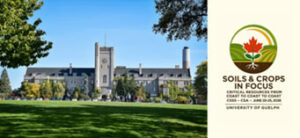
Date: June 20th – 25th, 2026
Location: University of Guelph, Canada
Joint meeting of the Canadian Society of Soil Science and the Canadian Society of Agronomy. This conference, with its theme of “Soils & Crops in Focus – Critical Resources from Coast to Coast to Coast” will address the importance of resilient and healthy food production throughout Canada.
Read more: https://event.fourwaves.com/cssscsa2026/pages
Soil Science Australia
2026 Soil Science Australia National Conference
Date: November 1st – 5th, 2026
Location: Boorloo, Perth, Australia
The conference will serve as a platform for a diversity of voices across science, policy, industry and community to explore our understanding of soils as the foundation of productivity, security, community and resilience.
Deadlines: Call for abstracts close April 24th, 2026
Read more: https://conference.soilscienceaustralia.org.au/
Soil Science Society of America (SSSA)
CANVAS 2026
Data: November 1st – 4th, 2026
Location: Portland, Oregon
The nexus of earth & science Four Days of Science, Community, and Discovery.
CANVAS 2026, the annual meeting of the American Society of Agronomy (ASA), the Crop Science Society of America (CSSA), and the Soil Science Society of America (SSSA).
With more than 4,000 scientists expected, it is the single largest gathering at the nexus of agronomy, crop science, soil science, and environmental science, and a valuable professional opportunity you can make plans to attend this year.
Oral and poster abstract submissions are open through June 9th (early submission rate) or June 23rd (final submission): www.sciencesocieties.org/canvas/submit. Edits are accepted through Nov. 4th. Registration opens May 1st, 2026.
Participants will be:
· Professionals & Practitioners, · Researchers & Academics, · Students & Early-Career Scientists
Read more: www.sciencesocieties.org/canvas
Conferences, Meetings and Workshops 2026
International Conference on Alternatives to Reduce Soil Degradation
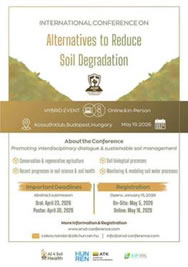
Date: May 19th, 2026
Location: Hybrid event, Online & In-Person. Kossuth Klub, Budapest, Hungary
This conference seeks to promote interdisciplinary partnerships and facilitate the exchange of knowledge, with the goal of better understanding the intricate complexities of soil and assessing the potential for sustainable development.
Special conference theme: The main focus of the conference will be on conservation agriculture, soil biological processes, and how to improve soil quality in practice.
Deadlines:
Oral: April 23rd, 2026; Poster: April 30th, 2026
Registration: On site: May 5th, 2026; Online: May 18th, 2026
Read more: www.arsd-conference.com
10th International Symposium on Soil Organic Matter (SOM2026)
Date: May 25th – 29th, 2026
Location: University of São Paulo (USP), Brazil.
The X International Symposium on Soil Organic Matter (SOM2026) represents a unique opportunity to bring together the world’s leading scientific authorities in the areas of soil organic matter, carbon, regenerative agriculture, sustainable livestock, forestry and ecosystem restoration.
Read more: Official website = https://eventosccarbon.com.br
100th anniversary of agricultural experimentation at the Warsaw University of Life Sciences – SGGW
Date: June 12th –13th, 2026
Location: Warsaw University of Life Sciences – SGGW, Poland
The conference will provide a platform for discussion and presentation of results in various fields, including agricultural sciences, agricultural chemistry, soil science, environmental sciences, and biological sciences, among others.
Important dates
The announcement of the final conference program: April 30th, 2026
Read more: https://ir.sggw.edu.pl/en/lte/
Call For Papers 3rd International Workshop “Resilient By Design: Organic Food & Farming Systems Amid CAP Volatility – Science-based Pathways For Climate, Nature, And Food”
Date: June 23rd – 25th, 2026
Location: Ustica Island (Palermo), Italy
The Workshop is jointly organized by the Italian Gruppo di Ricerca in Agricoltura Biologica (GRAB-IT) and the International Society of Organic Farming Research (ISOFAR).
Read more: https://easychair.org/cfp/GRAB-IT-2026
IFSA2026: Farming and Agri-Food Systems dynamics: facing crises and trade-offs in transition pathways
Date: June 29th – July 03rd, 2026
Location: Montpellier, France
This symposium aims to revisit progress and debates in co-designing and promoting sustainable Agri-Food systems to face crises and support multiscale decisions. There are many trade-offs to document but also many synergies to analyse when looking at transition pathways and impacts.
Key dates:
Registration deadline (also for field visits registration): April 30th, 2026
Read More: https://ifsa2026.sciencesconf.org/resource/page/id/3
Workshop on Innovation in Sustainable Agriculture & Food Production
Date: July 8th – 10th, 2026
Location: Minoa Palace Resort, Cahnia, Crete, Greece
Civilisation faces a huge challenge in feeding a world population estimated to reach 10 billion by 2050 a healthy diet while avoiding excessive consumption of natural resources and damage to the environment. Innovative approaches are required to agriculture and food production technology that increase yields and decrease waste, while minimising harm to the ecosystem. Recent world problems have demonstrated the importance of resilience throughout the ‘Farm to Fork’ food chain. The Sustainable Agriculture and Food Production workshop will address challenges in this area.
The workshop will be held as part of the KES International Sustainability in Energy and Buildings (SEB-26) and Sustainable Design and Manufacturing (SDM-26) conferences.
Read more: http://seb-26.kesinternational.org/workshop.php
12th Scientific Committee on Antarctic Research (SCAR) Open Science Conference & Meetings

Date: August 8th –19th, 2026
Location: Oslo, Norway
The SCAR and the Norwegian Polar Institute warmly invite you to the 12th SCAR Open Science Conference, The conference will feature an interdisciplinary programme that includes plenary lectures, parallel sessions, mini-symposia, workshops, panel discussions, posters, and social activities.
Join colleagues from around the world for a rich and varied programme, from plenary lectures and mini-symposia to parallel sessions, panels, posters, and an inspiring social programme in and around Oslo.
Read more: https://scar2026.org/
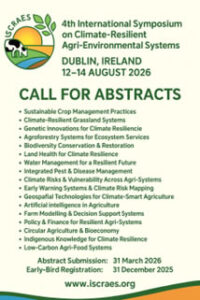
4th International Symposium on Climate-Resilient Agri-Environmental Systems (ISCRAES 2026)
Date: August 12th –14th, 2026
Location: Dublin, Ireland
The main theme of the ISCRAES 2026 is “Land Health Nexus: Cultivating Climate Resilience and Sustainable Agri-Environments”, leading to achieving the primary objective of agro-environmental sustainability by tackling the current major environmental, climate, and societal challenges facing the world.
Deadlines:
– Standard registration: 30 April 2026 (For inclusion in the proceedings and programme)
– Late registration fee: 31 July 2026
Read more: www.iscraes.org
International Symposium on Earthworm Ecology (ISEE13)
13th edition
Date: August 23rd-28th, 2026
Location: Wageningen, the Netherlands
This year’s theme, “From the lab to the field, from the field to the lab”, reflects the commitment to bridging the gap between experimental and real-world studies, both of which are essential to the advancement of earthworm research. ISEE13 will offer a dynamic platform for knowledge exchange, with a strong focus on early-career researchers who are at the forefront of addressing global challenges impacting or affected by earthworms.
Deadlines:
Deadline for registration: June 17th, 2026
Read more: 13th International Symposium on Earthworm Ecology – Home
First Celebration of the International Day of Caves and Karst (IDCK), proclaimed by UNESCO

Date: September 10th – 13th, 2026
Location: Postojna, Slovenia
Following the proclamation of the International Day of Caves and Karst (IDCK) by UNESCO, this is the first official celebration.
The central date of the celebration will be 13 September 2026, with a series of scientific and outreach events planned in the days leading up to it.
We warmly invite all supporters of the International Day of Caves and Karst initiative, as well as the wider scientific, educational and policy communities, to save the date. A formal announcement, registration form and detailed programme will follow.
Read more:
https://uis-speleo.org/;
https://www.caveskarstday.org/;
https://izrkp.zrc-sazu.si/en
5th International Soil Modeling Consortium Conference (ISMC 2026) “Advances and Challenges in Tropical Soil Modeling”
Date: September 15th – 19th, 2026
Location: Rio di Janeiro, Pontifical Catholic University of Rio de Janeiro (PUC-Rio), Brazil
The conference is organized by the University of São Paulo (USP), the Geological Service of Brazil (SGB), and PUC-RioThe official language of the conference is English.
ISMC 2026 will be the first ISMC conference held in Latin America and will focus on tropical soil modeling, emphasizing its importance for food and water security, carbon cycling, biodiversity, and land-use change.
Conference topics:
– Databases in PTF development to support soil modeling
– Soil structure and properties: Measurement, spatial and temporal variability, and uncertainty assessment
– Critical zone monitoring and modeling
– Modeling processes in highly weathered tropical soils
– Taking advantage of remote sensing and big data in soil modeling
– Modeling aspects of soil health
– General Session for model-related research
Important dates:
Abstract submission deadline: May 1st, 2026
Abstract acceptance: May 25th, 2026
Notification oral/poster: August 15th, 2026
Early bird registration June: 1st, 2026
Read more: https://ismc2026.com.br/default.aspx
10th International Nitrogen Conference (N2026)
Sustainable Nitrogen Management for Future Generations
Date: November 2nd-6th, 2026
Location: Wageningen, the Netherlands
The 10th International Nitrogen Conference (N2026) aims to foster global collaboration under the theme “Sustainable Nitrogen Management for Future Generations.” While coordination between science and policy is essential, effectively addressing the nitrogen challenge requires the active engagement of all stakeholders, including governments, researchers, educators, industry, civil society, and the public.
Read more: https://www.initrogen.org/events/n2026—kyoto—2—6-november-2026
Soil Gases in Environmental and Geological Processes International Conference
Date: November 6th, 2026
Venue: 45 Budaörsi Road, HUN-REN Research Centre for Astronomy and Earth Sciences, H-1112 Budapest, Hungary
The international conference, focusing on the role and significance of soil gases in environmental and geological systems, aims to bring together researchers, professionals, and
students working in the following fields: · H₂ and natural analogues, · CCS monitoring systems, · Radon in soil gases, · Agricultural aspects of soil gases, · Microbiological processes related to soil gases, · Soil gas studies associated with the carbon cycle, · Nitrogen and sulphur in soil gases, · Anthropogenic gases in soil
We welcome both oral and PICO presentations.
Abstract submission and early registration deadline: September 30th, 2026
Organizing Institutions
· HUN-REN CSFK Geographical Institute
· Hungarian Geological Society
· HUN-REN Institute of Earth Physics and Space Science
(EPSS)
· HUN-REN Centre for Agricultural Research (ATK)
· HUN-REN Centre for Energy Research (EK-EC)
· MS Energy Solutions Kft
Read more: https://hungarian-geography.hu/co2soil/conference
New Books
Distinguishing Soil Horizons of Alfisols Using MIR, Vis–NIR, and XRF Spectra
By G. Gozukara, A. E. Hartemink, E. O. Young, Y. Zhang – European Journal of Soil Science, Vol. 77 Issue 3, May–June 2026, Ed. Wiley
DOI: https://doi.org/10.1111/ejss.70337
Influence of Organic and Inorganic Amendments on Aggregate Development in a Sodic Dispersive Soil
By Y. Fang, Z. (Han) Weng, S. Uddin, I. Tahmasbian, L. Van Zwieten, M. Farrell, M. T. Rose, G. Chen, D. Collins, R. Armstrong, E. Tavakkol – Soil Use and Management, 2026,Vol. 42 Issue 2, Ed. Wiley
Structural Quality of an Ultisol Under Long-Term Different Tillage Systems and Cover Crops With Corn in Northeast Brazil
By Alceu Pedrotti, Jusimara de Andrade Santos, Luiz Diego Vidal Santos, Brisa Marina da Silva Andrade, Francisco Sandro Rodrigues Holanda, Renisson Neponuceno de Araújo Filho, Júlio Cesar Azevedo Nobrega, Richard Matos de Souza, Caciana Costa Feitosa – Soil Use and Management, 2026,Vol. 42 Issue 2, Ed. Wiley
DOI: https://doi.org/10.1111/sum.70214
Opportunities
Summer school on soil health and intercropping in Florence, Italy: Applications open
Understanding how plant–soil interactions shape productivity and soil health is key to making intercropping a viable alternative to monocultures. The LEGUMINOSE Summer School “Understanding Contemporary Plant–Soil Feedback in Intercropping” offers a dedicated space to explore this topic, with a strong focus on soil health, soil microbial communities and nutrient dynamics in legume–cereal systems.
Designed for graduate students, early-career researchers and practitioners, the summer school provides a combination of lectures, hands-on training, and field visits. Participants will gain both theoretical and practical knowledge of how plant–soil feedback can be assessed and how it affects crop performance and soil fertility in intercropping systems.
Applications are now open for those interested in joining the summer school in Florence.
Practical details
• Dates: 19–21 May 2026
• Location: University of Florence, Italy
How to register
To apply, please prepare a short abstract (max. 250 words) describing your research interest or background in soil–plant systems. Send your application by email to shamina.pathan@unifi.it
Multilateral dialogue on principles and values in research & innovation cooperation
The European Commission is joining forces with the ISC to expand its multilateral dialogue on research and innovation collaboration to the global level. Between 2026 and 2029, the project will gather regional perspectives through a series of high-level workshops and consultations in Latin America, Africa, Asia, and online. Discussions will culminate in a global ministerial meeting, which will aim to adopt a declaration for international scientific and innovation collaboration and a set of practical tools and frameworks.
ISC Members, Fellows and partners will be invited to provide input as part of the consultative process: https://council.science/news/multilateral-dialogue-launch/
Opportunities from the ISC community
Call for applications: TWAS-CSIR Postgraduate Fellowship Programme aimed at foreign scholars from developing countries. Deadline: 6 May 2026.
Call for applications: Host the International Union of Pure and Applied Chemistry (IUPAC) World Polymer Congress 2032. Deadline: 30 June 2026.
Call for nominations: Fellowship candidates for the Australian Academy of Science. Deadline: 31 July 2026.
Call for nominations: Stock Water Prize, awarded to an individual, institution or organization that has made substantial contribution to our understanding, use and protection of water resources. Deadline: 15 September 2026.
ECHO Soil Challenge – Soil Stories
The ECHO Soil Challenge – Soil Stories aims to raise awareness among students, teachers, educators and citizens about the value of soil as a vital resource for ecosystems, food security and climate. It promotes creativity, scientific experimentation, and science communication, while also contributing to the dissemination of the ECHO SoiLab for Teens as an educational tool for hands-on school activities.
Participation in the ECHO Soil Challenge – Soil Stories contest is open to applicants based in the following eligible countries: Italy, Poland, Spain, Scotland, Greece, Romania, Germany, Portugal, Finland.
The contest has four categories:
• Category 1: children aged 6–10 (primary school)
• Category 2: children aged 11–13 (lower secondary school)
• Category 3: young people aged 14–19 (upper secondary school)
• Category 4: ECHO Soil Ambassador
For each category, 3 winners will be selected.
For Categories 1-3, submissions must be presented by teachers, professors, or educators on behalf of children or young people aged 6–19. Projects may be developed by classes or groups, under the guidance of the submitting teacher or educator. The teacher or educator acts as the official applicant and contact person, and is responsible for submitting the project, communicating with the ECHO team, and ensuring compliance with the contest rules.
Category 4 is open to people who are involved in the ECHO project as ECHO Soil Ambassador.
Timeline
• Submission deadline: November 9th, 2026
• Announcement of winners: December 16th, 2026
• Final webinar with winners: January 15th, 2027
Read more: https://echosoil.eu/echo-soil-challenge-soilstories
Communication
To IUSS Commission and Working Group Chairs: you are kindly requested to inform the Secretariat whenever there is a change within your Commission and/or Working Group officers. In this way, it will be possible to keep the IUSS Officers Mailing List regularly updated.
To IUSS Full Members: please do not forget to let the Secretariat know about your new President, Secretary, Contact Person. This will be vital in keeping the mailing list updated, so you will not miss out any communication.
Please provide the new name, surname, position and e-mail address to: iuss.secretariat@crea.gov.it
If you are interested in promoting your product or book, event, job call in our Alert, please send an email to iuss.secretariat@crea.gov.it.
You must be logged in to post a comment.